
BYD Overtakes Tesla, Shifting Global EV Brand Leadership
BYD overtook Tesla as the world's largest EV seller by prioritizing local pricing and product iteration over global uniformity. CMOs must rethink brand leadership in a value-driven market.


China’s BYD has overtaken Tesla to become the world’s largest seller of electric vehicles, marking a symbolic and strategic shift in the global auto market. In 2025, BYD sold more than 2.25 million battery-powered vehicles, up nearly 28% year over year, while Tesla’s global deliveries fell almost 9% to 1.64 million units.
The crossover matters not just for investors, but for marketers tracking how brand power, pricing, and localization now shape category leadership. BYD achieved its lead without selling EVs in the US, even as China remains Tesla’s second-largest market.
A Brand Momentum Gap is Opening
Tesla’s decline reflects a convergence of pressures. The company faced a softer response to recent product updates, rising political scrutiny around CEO Elon Musk, and intensifying competition from Chinese manufacturers offering lower prices with comparable quality. In the final quarter of 2025 alone, Tesla deliveries dropped 16%, partly driven by the expiration of a US government subsidy that had offered up to US$7,500 in incentives.
BYD, meanwhile, benefited from a sharp pricing strategy, vertical integration in batteries, and a portfolio designed for local and regional demand rather than global uniformity. Other Chinese brands such as Geely and MG are following similar playbooks, eroding the dominance of Western incumbents across Asia, Europe, and emerging markets.
Wall Street analysts have already lowered Tesla’s 2026 delivery forecasts, signaling that the shift may be structural rather than cyclical.
 Leighton Cosseboom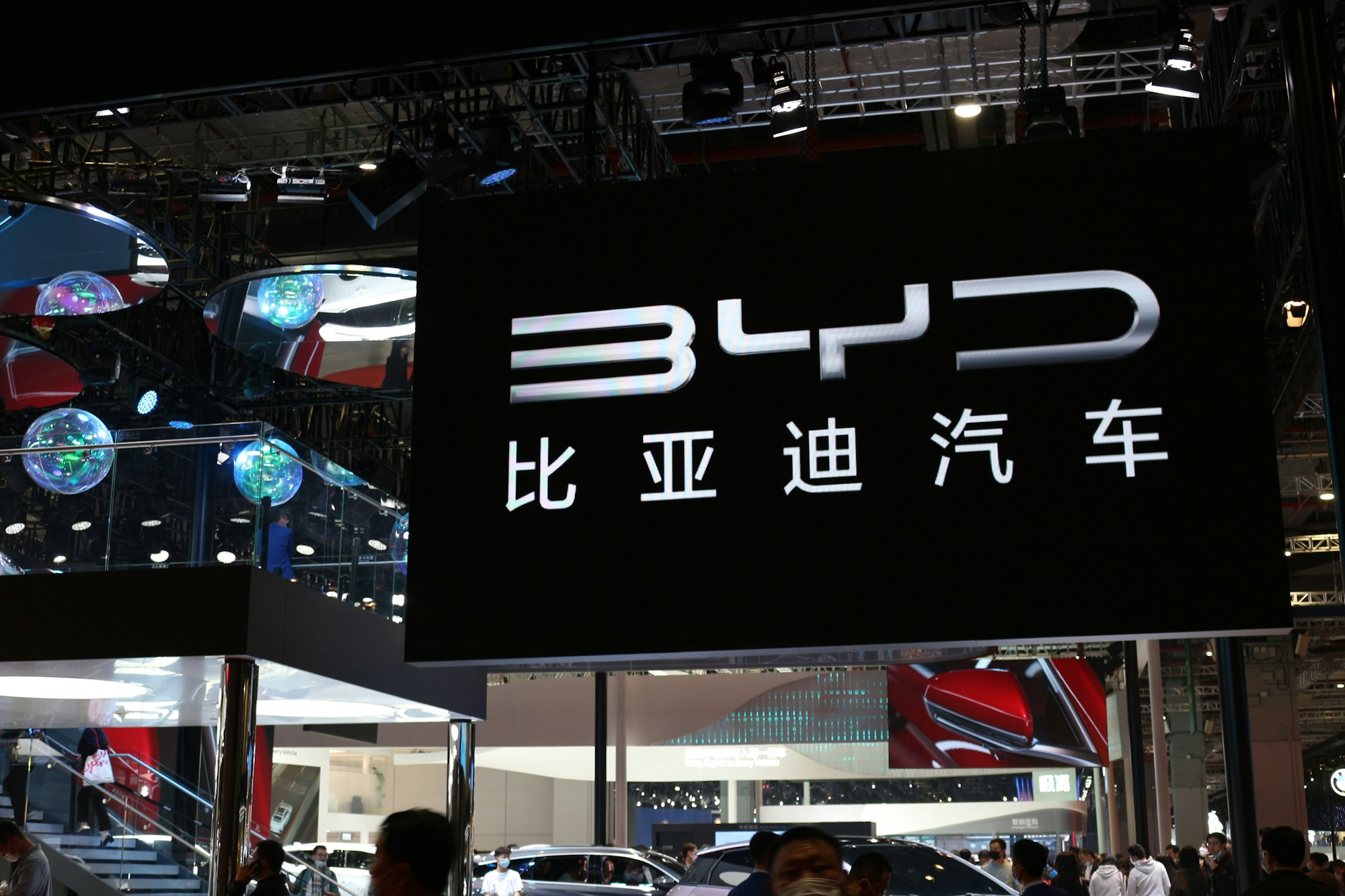
What This Means for CMOs and Brand Leaders
For CMOs, the BYD-Tesla reversal highlights a deeper branding reality. Global leadership no longer comes from singular innovation narratives alone. It is increasingly built on value perception, speed of iteration, and cultural alignment.
Key takeaways for marketers:
- Price is now part of brand identity, not just a sales lever
- Local relevance can outperform global uniformity
- Operational scale and supply chain control reinforce brand trust
- Product cadence matters more than hero launches
According to Bain research, brands that localize product and pricing strategy grow up to 2x faster in Asia Pacific compared to those relying on global-first positioning. BYD’s rise reflects that logic applied at an industrial scale.
Tesla has responded by introducing lower-cost versions of its top-selling models in the US, signaling a pivot from premium-led branding to demand defense. The challenge will be preserving brand equity while competing in an increasingly price-sensitive global EV market.
 Leighton Cosseboom
The Bigger Signal
The EV race is no longer just about technology leadership. It is about who owns the narrative of accessibility, reliability, and everyday relevance. BYD’s ascent shows that Chinese brands are no longer just manufacturing leaders, but brand leaders capable of reshaping global consumer perception.
For marketers across automotive, mobility, and clean energy, the message is clear. The next decade of category leadership will be won as much through brand strategy and localization as through engineering.
Want to stay up-to-date on the stories shaping Asia's media, marketing, and comms industry? Subscribe to Mission Media for exclusive insights, campaign deep-dives, and actionable intel.

Want to reach thousands of marketing and comms professionals across Asia?
Get your brand in front of industry decision-makers.
Partner with Mission Media →