ByteDance Invests $22B in Nvidia While Developing Samsung AI Chips
ByteDance spends $22B on Nvidia chips while developing Samsung AI chips, signaling how Chinese tech giants are hedging bets between immediate AI needs and long-term chip independence.

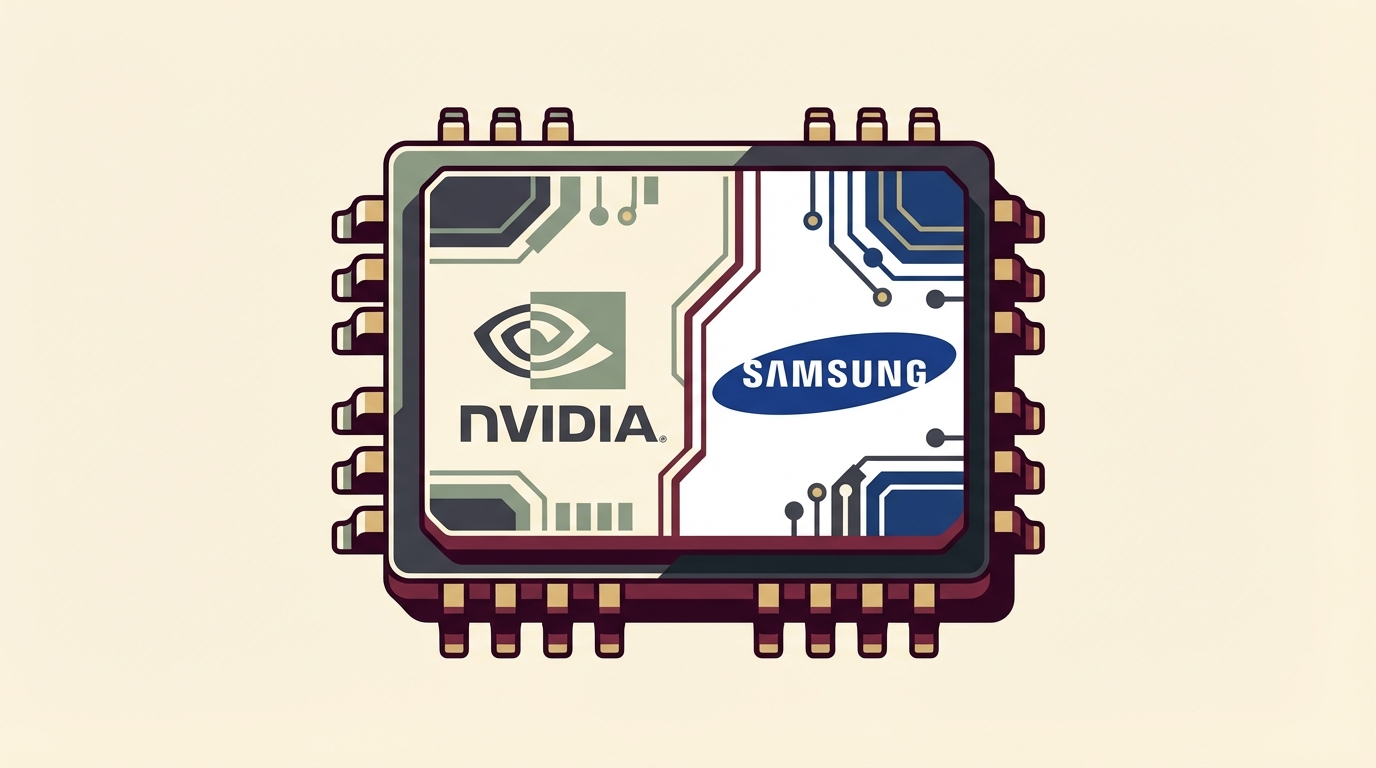
ByteDance is developing its own AI chip through a manufacturing partnership with Samsung Electronics, targeting sample delivery by March while simultaneously planning to spend over 160 billion yuan (approximately US$22 billion) on AI procurement this year, with more than half allocated to purchasing Nvidia chips.
Dual-Track Strategy Balances Immediate Needs with Long-Term Independence
The TikTok parent company's SeedChip project aims to produce at least 100,000 units in 2026, potentially scaling to 350,000 units annually. ByteDance has pursued chip development since 2022 and previously collaborated with US chip designer Broadcom on an advanced AI processor manufactured by Taiwan's TSMC, according to Reuters reporting from June 2024.
The Samsung partnership offers ByteDance two critical advantages: foundry manufacturing services and access to high-bandwidth memory chips during global shortages driven by AI infrastructure expansion. These memory components have become particularly scarce as tech companies worldwide race to build AI computing capacity.
ByteDance executive Zhao Qi acknowledged at a January all-hands meeting that "ByteDance's AI models currently lag behind global leaders such as OpenAI," but pledged continued investment across the company's Doubao chatbot and international Dola version. The company established its Seed division in 2023 specifically to develop AI models and promote applications across its portfolio spanning short video, e-commerce, and enterprise cloud services.
Chinese Tech Giants Race to Reduce Nvidia Dependence
ByteDance trails competitors in proprietary chip deployment. Alibaba recently unveiled its Zhenwu chip for large-scale AI workloads, with its T-head division achieving the largest AI chip shipments in China through internal demand. Baidu has advanced further, already selling Kunlunxin chips to external clients while planning an IPO for the chip unit.
 Mission Media
Huawei's Ascend series captured top domestic market share in China's AI chip market in the first half of 2025 according to IDC, though performance remains at 60% to 70% of Nvidia H200 capability. At least nine Chinese firms have joined the 10,000-chip club by shipping over 10,000 units each, including Moore Threads, Iluvatar CoreX (which shipped 52,000 chips to 290 clients), Enflame, Cambricon, Sunrise, and Tsingmicro.
China's chipmakers collectively aim to triple AI chip output in 2026, with SMIC planning to double 7nm production capacity to support this expansion.
Looking for World-Class PR & Comms in APAC?
Tailored service packages for select brands and agencies.
Export Policy Changes Create Complex Procurement Landscape
The January 2026 Trump administration policy reversal approved Nvidia H200 sales to China with a 25% tariff and 50% volume cap, enabling Chinese tech firms to place orders worth up to US$14 billion for over two million units.
However, China instructed customs to block H200 imports unless essential and warned firms against purchases to avoid strategic US dependence. This tension between immediate computing needs and supply chain independence drives the vertical integration trend across Chinese tech companies.
Wei Sun, analyst at Counterpoint Research, noted that "China's access to Nvidia H200 chips does not diminish their self-sufficiency drive," reflecting how geopolitical considerations shape procurement decisions alongside technical requirements.
ByteDance's dual approach captures this complexity: buying cutting-edge Nvidia hardware for current AI development while building proprietary alternatives for future independence. This strategy may become the template for Asian tech giants navigating fragmented chip supply chains.
Want to reach thousands of marketing and comms professionals across Asia?
Get your brand in front of industry decision-makers.
Partner with Mission Media →