US Alleges DeepSeek Used Banned Nvidia Chips in China
Trump administration alleges DeepSeek trained AI on banned Nvidia Blackwell chips in Inner Mongolia. Export control violations raise stakes for US-China tech competition and Nvidia's China revenue ...


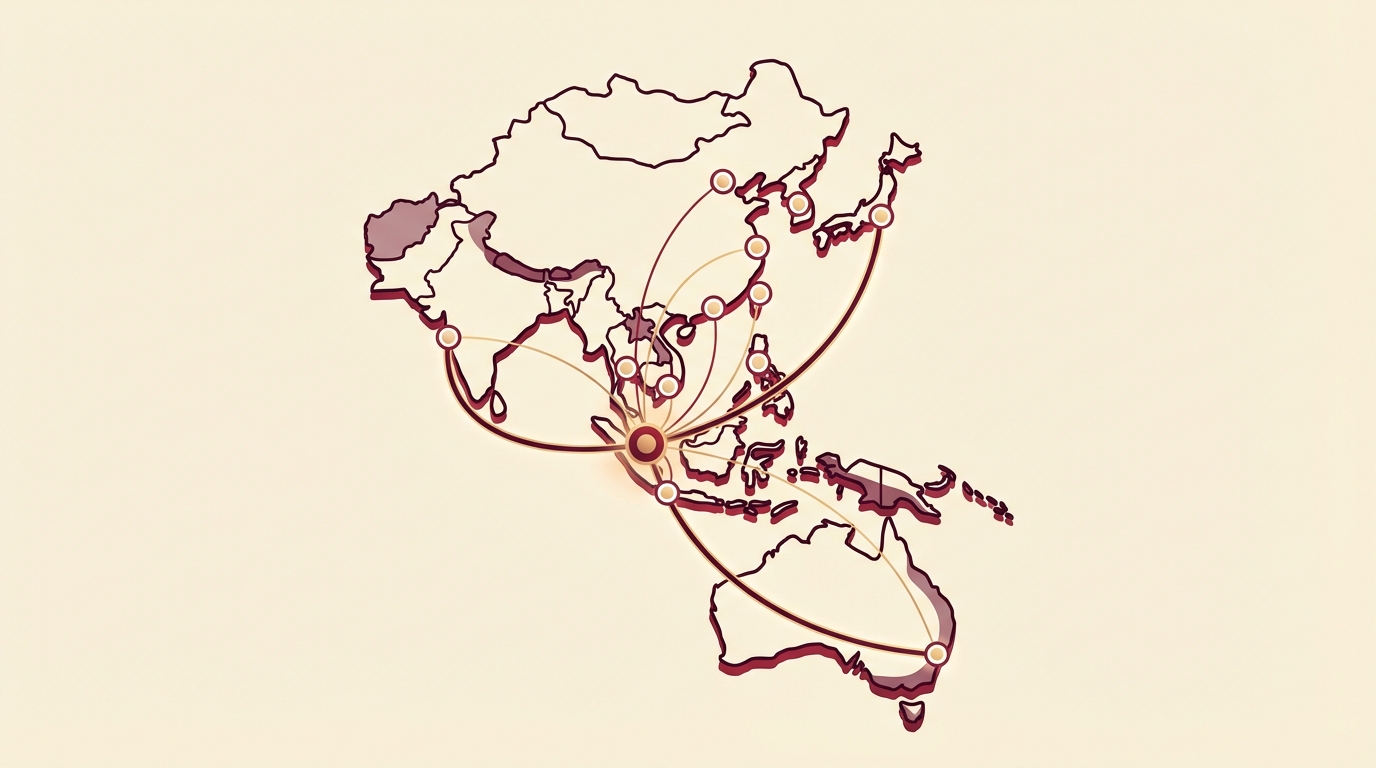
A senior Trump administration official alleged on February 23, 2026, that Chinese AI startup DeepSeek trained its latest AI model on Nvidia's Blackwell chips at a data center in Inner Mongolia, potentially violating US export controls that explicitly ban Blackwell shipments to China.
Allegations Target DeepSeek's Inner Mongolia Data Center
The unnamed official stated that DeepSeek would likely attempt to conceal technical indicators revealing its use of American chips. The suspected acquisition mechanism is smuggling through shell company networks, exploiting gaps in the US Bureau of Industry and Security's enforcement capacity.
DeepSeek is also alleged to have used distillation techniques, drawing on advanced AI models from Anthropic, Google, OpenAI, and xAI to train its own system. The Commerce Department had not publicly commented as of February 24, 2026. DeepSeek had not issued a public response.
The Chinese embassy opposed what it called "drawing ideological lines" and criticized the "expansive use of export controls," characterizing such measures as politicizing economic and technological issues.
Nvidia Caught Between Enforcement and Commercial Exposure
Nvidia's China revenue represents approximately 13% of its total revenue, creating direct financial tension with enforcement demands. Nvidia's stock rose 0.37% to US$192.25 in premarket trading on February 24, 2026, suggesting markets interpreted the news as broadly neutral.
 Mission Media
Nvidia CEO Jensen Huang has publicly argued that restricting chip sales to China accelerates Huawei's competing chip development rather than limiting Chinese AI progress. President Trump stated that the most advanced chips should remain exclusive to US companies, after reversing an earlier signal that a downgraded Blackwell version might be approved for China.
In December 2025, Trump conditionally approved sales of Nvidia's H200 chips to China, capped at approximately one million units. Those shipments remain stalled due to approval guardrails as of February 2026.
China's Domestic Chip Ecosystem Advances in Parallel
China's domestic semiconductor sector has made measurable progress under US restrictions. SMIC reached a production capacity of 50,000 7nm wafers per month by end-2025, achieved without EUV lithography, enabling potentially millions of Huawei Ascend 910C chips annually.
In September 2025, China banned domestic purchases of Nvidia's H20 and RTX Pro 6000D chips to promote Huawei's Ascend series. China hosts approximately 50% of global AI firms and is targeting AI hardware self-reliance by 2027, with Huawei, Baidu, Tencent, Cambricon, and Biren all developing alternative chip architectures.
Experts note, however, that domestic alternatives sustain operational AI workloads but cannot yet match Nvidia's performance at the frontier level required for training large-scale models, which is why access to Blackwell chips remains commercially attractive to Chinese AI developers.
Policy Reversals Create Uncertainty for Asian Supply Chains
The Trump administration's chip export policy has undergone multiple reversals between April 2025 and February 2026, creating an unpredictable environment for Asian businesses that rely on AI infrastructure or partnerships with Chinese AI developers.
US policymakers are also considering tighter controls on semiconductor manufacturing equipment, specifically DUV immersion lithography tools and high-bandwidth memory, as a more targeted enforcement mechanism beyond chip sales restrictions alone.
The February 23 allegation represents the most direct public accusation yet that China's AI sector is circumventing US export controls at the hardware level. The Commerce Department has not announced any enforcement action in response.
Want to stay up-to-date on the stories shaping Asia's media, marketing, and comms industry? Subscribe to Mission Media for exclusive insights, campaign deep-dives, and actionable intel.