
SoftBank, OpenAI to Launch Enterprise AI for Corporate Japan
SoftBank and OpenAI launch enterprise AI for Japan's 62% of lagging corporations in 2026. CMOs gain faster campaign cycles and voice-enabled content tools.

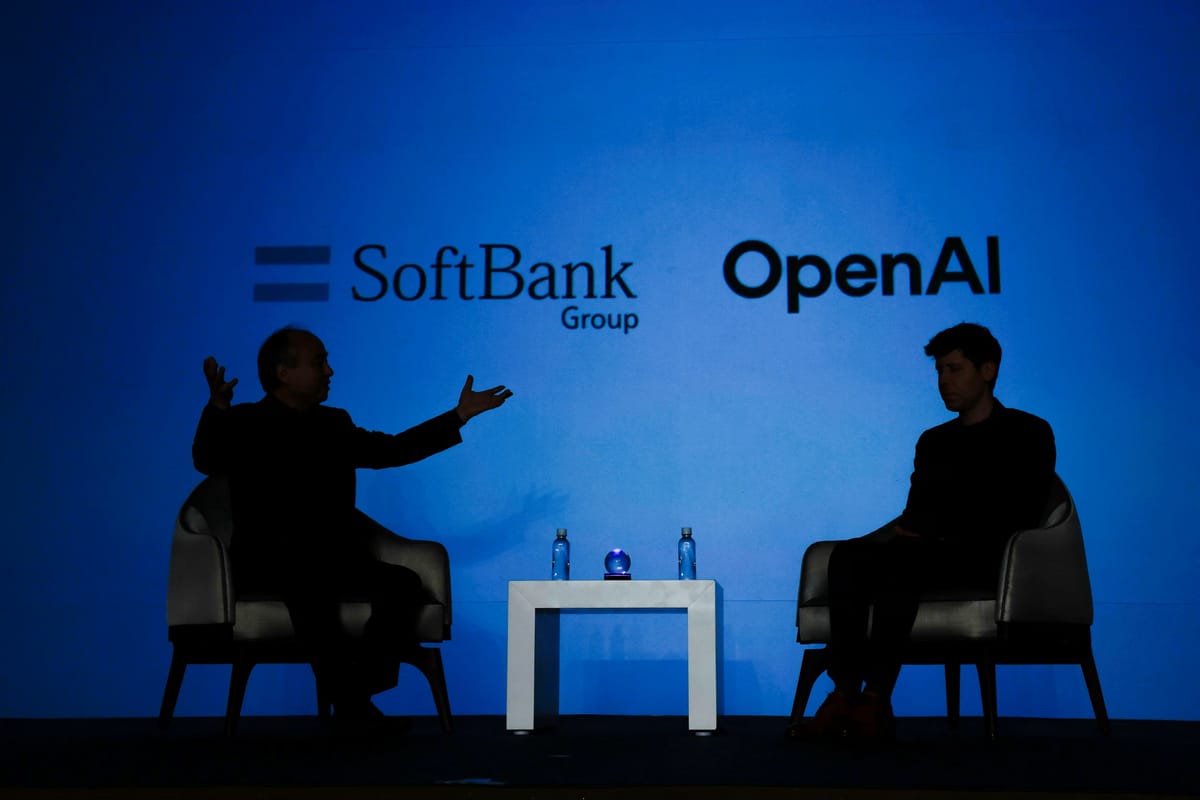
SoftBank Corp and OpenAI plan to launch AI services for Japanese enterprises in 2026 through a joint venture, SB OAI Japan, aiming to accelerate business processes with tools that include voice recognition capabilities.
The 50-50 partnership targets Japan's corporate sector, where 62% of enterprises currently lag in AI adoption, according to the Japan Business Federation.
Testing Ground for Commercial Rollout
SoftBank Corp has already deployed 2.5 million custom GPTs internally, serving as a real-world test case for refining what will become "Crystal Intelligence" before broader commercialization. The mobile carrier's September quarter results showed resilience despite market concerns, with net income rising 26% to 203.4 billion yen (~US$1.4 billion) and revenue increasing 8%.
"Crystal Intelligence will completely change the speed of business operations in Japan," said Junichi Miyakawa, President of SoftBank Corp. The platform's voice recognition features aim to reduce manual tasks and accelerate decision-making processes across Japanese corporations.
For marketing and communications teams, this could mean compressed cycles for campaign planning, content approvals, and media monitoring. The voice-enabled tools may allow faster briefing processes and real-time content adjustments, though specific features remain under development.
 Leighton Cosseboom
Closing Japan's Enterprise AI Gap
The partnership addresses a significant opportunity in Japan's US$1.1 trillion corporate sector. While competitors like NEC and Fujitsu are accelerating their enterprise AI offerings, SoftBank's first-mover advantage through internal deployment provides validation before commercial launch.
OpenAI CEO Sam Altman said, "This JV accelerates our vision for transformative AI in influential companies, starting with Japan."
The venture represents OpenAI's strategy to expand beyond consumer applications into enterprise markets across Asia, where IDC projects a US$28.4 billion enterprise AI market by 2025.
SoftBank Group's shares fell 10% following the announcement due to concerns about exposure to OpenAI and Nvidia, but SoftBank Corp's shares declined only 0.5%, suggesting investor confidence in the mobile unit's revenue-generating potential.
 Leighton Cosseboom
Infrastructure and Expansion
SoftBank Corp is pursuing Nvidia's Rubin chips to meet growing AI infrastructure demands in Japan. The company also plans to offer startups free computing infrastructure, potentially creating an ecosystem of AI-enabled businesses that become future Crystal Intelligence customers.
The circular investment strategy uses SoftBank's existing OpenAI investments to create AI services sold back to its portfolio companies and beyond. This approach mirrors SoftBank's historical role in facilitating the introduction of foreign technologies in Japan.
Meanwhile, SoftBank's payment business PayPay, with 58 million users, is preparing for a US stock debut, though progress has been delayed by a US government shutdown. Miyakawa expects PayPay to become highly valuable and play a role in SoftBank's broader AI monetization strategy.
The 2026 launch timeline gives corporate Japan roughly one year to prepare for data localization requirements, governance frameworks, and integration planning as enterprise AI adoption accelerates across the region.
Want to stay up-to-date on the stories shaping Asia's media, marketing, and comms industry? Subscribe to Mission Media for exclusive insights, campaign deep-dives, and actionable intel.

Want to reach thousands of marketing and comms professionals across Asia?
Get your brand in front of industry decision-makers.
Partner with Mission Media →