AI Agents Come for the Marketing Stack as Meta Acquires Singapore’s Manus
Meta's Manus acquisition signals AI agents are moving from chatbots to workflow automation. CMOs must prepare for agents handling media buying, reporting, and campaign optimization.

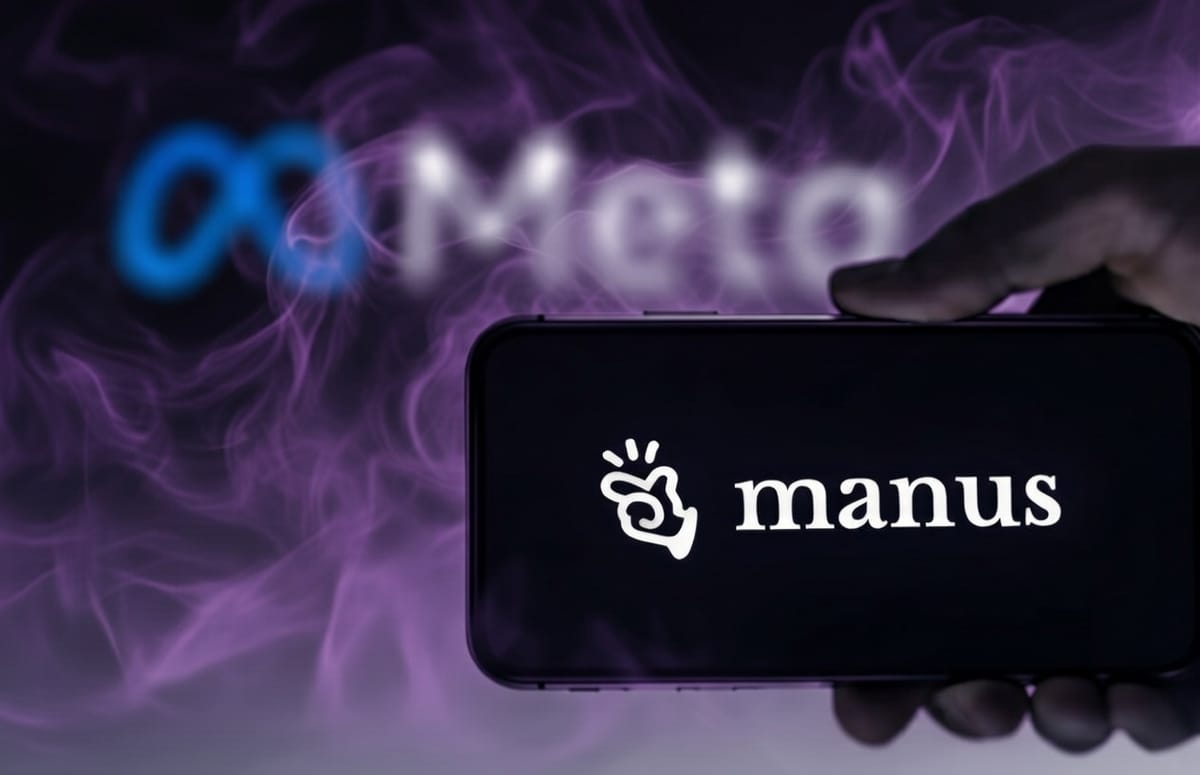
Meta has agreed to acquire Singapore-based Manus, a fast-growing AI agent developer, as part of its push to commercialize artificial intelligence beyond research and into practical enterprise workflows.
The deal gives Meta ownership of Manus' general-purpose AI agent platform, which currently serves businesses via subscription and reported an annual revenue run rate of US$125 million earlier this year. Financial terms were undisclosed.
Manus, founded in China and later relocated to Singapore under its parent Butterfly Effect, develops agents capable of completing tasks without human supervision. These include resume screening, itinerary planning, stock analysis, and other workflow functions typically handled by junior staff or assistants. The startup recently raised capital at a nearly US$500 million valuation, backed by Benchmark.
Meta plans to continue selling Manus' product independently while integrating agent technology into Meta AI, WhatsApp, Instagram, Facebook, business tools, and potentially its Ray-Ban Meta devices. This accelerates Meta’s pivot from consumer chatbots to task-executing agents that can act, not just generate text.
 Leighton Cosseboom
Why This Matters for CMOs and Enterprise Leaders
This acquisition signals a shift in how AI will be monetized. Instead of chat-based interfaces that rely on user prompts, agents automate repeatable workflows and execute commands end-to-end. For marketers, this opens new operational changes:
- Automated media buying, reporting, segmentation, and creative iteration
- Workflow agents replacing routine campaign tasks
- Rapid content adaptation across languages and markets
- Always-on research agents analyzing sentiment, competitors, and trends
- AI assistants conducting customer support and lead qualification
According to Gartner, 40% of enterprise workloads are expected to be agent-automated by 2027, reducing operational bottlenecks and increasing time spent on creative strategy rather than manual execution.
The move also intensifies competitive pressure on OpenAI, Google, Microsoft, Salesforce, and ServiceNow, all investing heavily in agent ecosystems. Meta's advantage lies in distribution. Its products interact with billions of users across messaging and social surfaces, creating a potential launchpad for the world’s largest agent rollout.
 Leighton Cosseboom
Strategic Read for Brands
AI agents will not just assist marketers; they will run workflows, launch campaigns, optimize audiences, and reallocate spend automatically. CMOs should be preparing for:
- Teams shifting from operator roles to supervisor roles
- Agent-driven media workflows that optimize in real time
- Inbound and CRM automated from qualification to nurture
- Data governance and compliance are becoming board-level priorities
As Manus CEO Xiao Hong noted, "The era of AI that does not just talk, but acts, creates, and delivers, is only beginning." Meta’s distribution, paired with Manus’ agent engine, makes that future much closer.
Want to stay up-to-date on the stories shaping Asia's media, marketing, and comms industry? Subscribe to Mission Media for exclusive insights, campaign deep-dives, and actionable intel.

Want to reach thousands of marketing and comms professionals across Asia?
Get your brand in front of industry decision-makers.
Partner with Mission Media →