Why 3D Printing Is Becoming Brand Protection's Next Battleground
Pop Mart's landmark lawsuit against Bambu Lab over 3D-printed Labubu counterfeits could reshape platform liability rules across Asia's creator economy. With Labubu driving 30% of revenue and 1.83 million counterfeit units seized in 2025, this case mirrors early digital music litigation and forces.

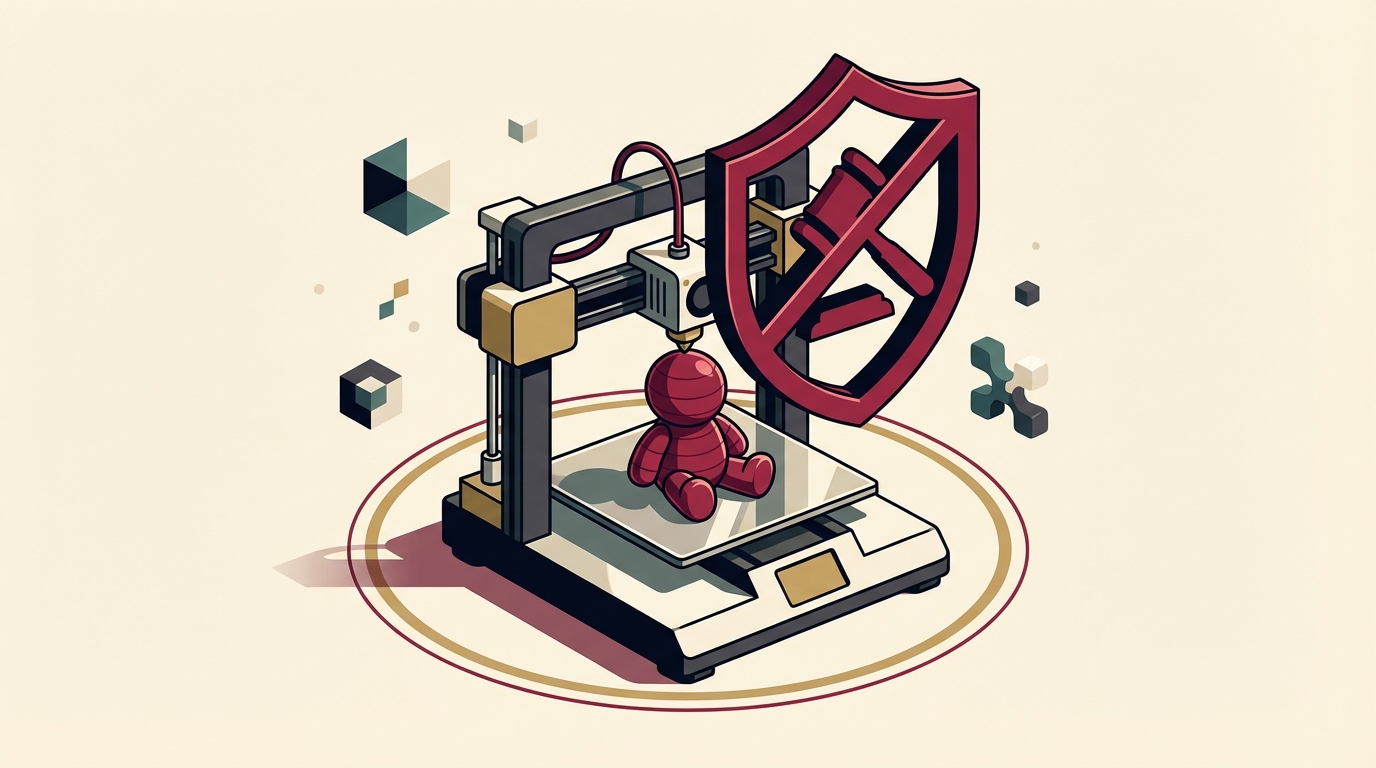
Pop Mart International Group has filed a copyright infringement lawsuit against Shenzhen-based Bambu Lab, with trial scheduled for April 2, 2026, in the People's Court of Pudong New Area, Shanghai. The case targets MakerWorld, Bambu Lab's 3D-model sharing platform, over user-uploaded design files enabling others to print replicas of Pop Mart's Labubu character.
Stakes Are High as Labubu Drives Pop Mart Revenue
Labubu accounted for more than 30% of Pop Mart's total 2025 sales revenue, making it the company's most commercially critical asset. Chinese customs authorities seized 1.83 million counterfeit Labubu products in 2025 alone, illustrating the scale of infringement the toymaker is fighting.
MakerWorld hosts approximately one million models and serves nearly 10 million monthly active users. More than 90% of its content is offered free of charge. Legal observers have described the Pop Mart action as the largest-scale copyright enforcement case by a well-known IP owner against a 3D-printing platform to date.
Neither Pop Mart nor Bambu Lab responded to media requests for comment on the lawsuit.
Safe Harbor Doctrine at the Center of Legal Debate
The case turns on whether MakerWorld qualifies for "safe harbor" protection. Under this legal doctrine, platforms are generally shielded from liability if they remove infringing content after being notified. The central question is whether MakerWorld knew, or reasonably should have known, about the Labubu files and failed to act.
 Mission Media
Legal specialists have compared the case to early digital music-sharing litigation, including Napster, which reshaped platform liability rules across the internet industry. Direct Labubu searches have since been removed from MakerWorld, but design files based on other major intellectual properties, including Pokémon and Hello Kitty, remained accessible after the lawsuit was filed.
A Chinese court previously awarded Pop Mart RMB 10,000 (approximately US$1,380) in damages against an individual seller of 3D-printed Labubu replicas in a case filed December 2024, establishing that sharing digital model files can infringe copyright at the reproduction level.
Bambu Lab Faces Concurrent IP Liability Exposure
This is not Bambu Lab's first copyright dispute. The studio behind the animation series The Legend of Luo Xiaohei sued Bambu Lab over unauthorized models on MakerWorld, with a further court hearing scheduled for March 20, 2026. The infringing files were subsequently removed from the platform.
The concurrent cases signal that MakerWorld's IP liability is systemic rather than isolated. Separately, Pop Mart has issued cease-and-desist letters in Singapore and Taiwan targeting businesses using Labubu's likeness without authorization. Bubble-tea brand Playmade reportedly halted Labubu-themed promotions following legal warnings.
MakerWorld itself threatened legal action against rival platforms in October 2025, accusing them of hosting content stolen from creators whose work was exclusive to its platform.
A Manufacturing Shift That Outpaces Traditional Enforcement
Chinese manufacturers now account for approximately 95% of global entry-level desktop 3D printer shipments, with more than one million units shipped in Q1 2025 alone. Bambu Lab was founded in 2020 by former DJI Technology engineers and has become a leading consumer 3D printer brand.
Singapore, Hong Kong, and Japan are identified as the strongest IP enforcement territories in Asia for brand owners pursuing unauthorized 3D-printed products. Thailand stands out among ASEAN markets for providing no exception for private or noncommercial 3D printing of protected designs, meaning even home printing of a design-patented object constitutes infringement under Thai law.
The April 2 trial date will be closely watched across the 3D-printing and consumer brand industries for its implications on platform liability standards in China and beyond.
Want to reach thousands of marketing and comms professionals across Asia?
Get your brand in front of industry decision-makers.
Partner with Mission Media →