
Toyota NZ Hits Record Sales by Making Ubiquity the Creative Strategy
Toyota NZ achieved record passenger vehicle sales by turning market ubiquity into creative strategy. How one-in-four vehicles on roads became the campaign itself.

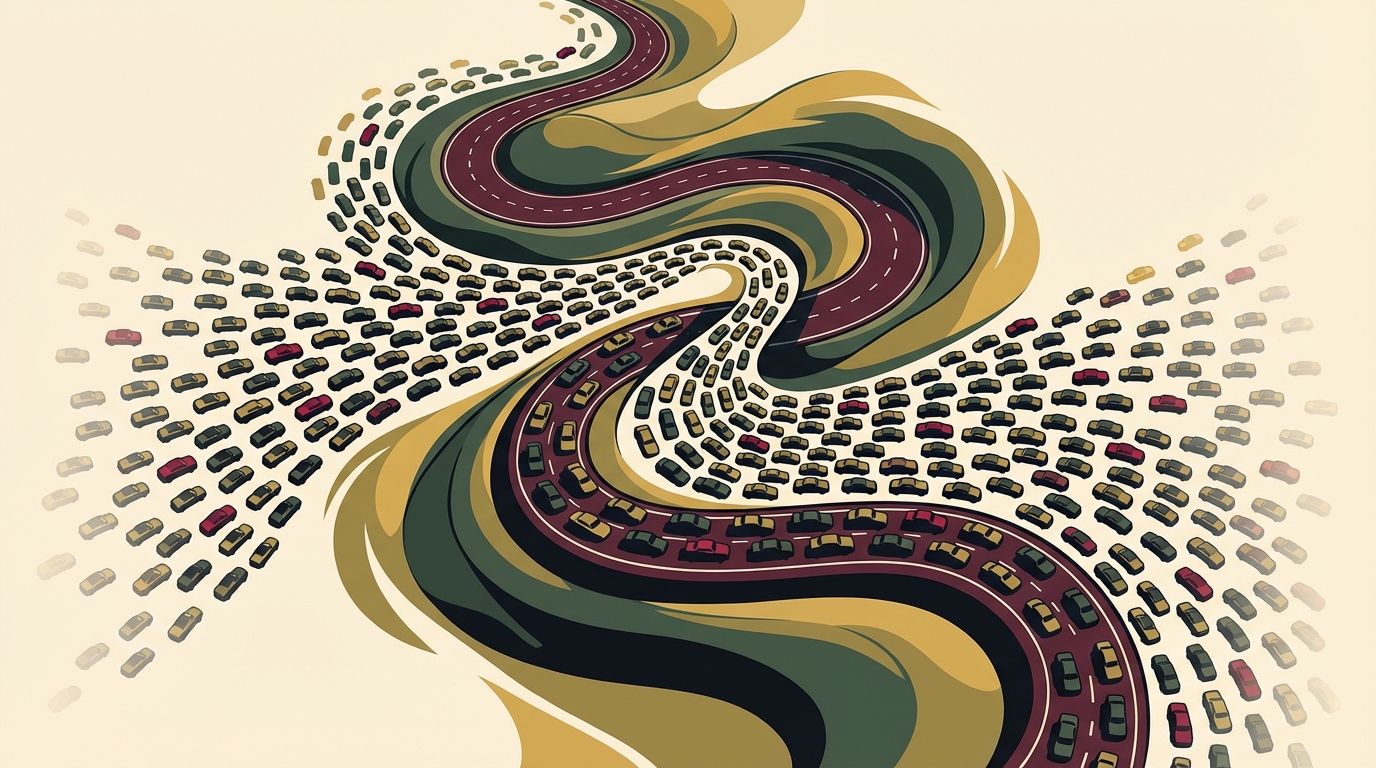
Toyota New Zealand and agency partners Saatchi & Saatchi, Spark Foundry, and Digitas NZ have evolved the brand's long-running "Let's Go Places" platform into a campaign that treats the country's roads as its primary media channel, achieving the highest passenger vehicle sales in the brand's New Zealand history.
Campaign Turns Physical Presence Into the Creative Medium
The campaign's central premise emerged from a straightforward market reality. Toyota holds 24% of the New Zealand vehicle market, recording 33,032 units sold in 2025. That means one in four vehicles on any given road is already a Toyota.
 Mission Media
Rather than inserting the brand into New Zealand culture, the agencies chose to reveal what was already there. A hero film depicted everyday New Zealanders noticing the density of Toyotas around them and asking: "Is this an ad for Toyota?" Real-time billboards counted Toyotas passing key intersections. The campaign extended across out-of-home advertising, social media, digital platforms, and live activations, covering Toyota's full range including new vehicles, used cars, fleet vehicles, rentals, and community-sponsored vehicles.
Structural Vulnerability Behind the Brand-Building Investment
Toyota has held the top position in New Zealand's automotive market for 38 consecutive years and is recognized as the country's most reputable brand per the Kantar Corporate Reputation Index. At that level of market presence, awareness is automatic. The communication challenge shifts to emotional connection.
The RAV4 illustrates the stakes clearly. The model recorded 10,540 units in 2024, but 81% of October 2024 RAV4 sales were attributed to rental fleet purchases. High fleet dependency means volume figures can mask weak bonds with individual consumers. That structural exposure makes genuine emotional connection not optional, but strategically urgent.
SUV models now account for 84.9% of New Zealand's passenger market in 2025, intensifying competition in the segment where Toyota generates its heaviest volume.
Asia Pacific Parallels for Category Leaders
The dynamics Toyota New Zealand navigated have direct relevance across Asia Pacific. In saturated categories, whether automotive, consumer electronics, or food and beverage, functional product differences are quickly copied by competitors. Brand differentiation through emotional and cultural storytelling becomes the primary remaining lever.
A comparable approach appears in Singapore's milk tea market, where CHAGEE used its Yunnan origins to reframe the category around traditional Chinese tea culture and heritage craftsmanship rather than competing on product features. Both cases demonstrate the same principle: authentic cultural narratives create stronger emotional connections than manufactured positioning.
The inverse is illustrated by Chinese exhibitors at IFA Berlin 2025, where more than 690 Chinese brands occupied peripheral booth placements despite strong product quality. Prioritizing manufacturing over brand equity investment left those companies without the long-term positioning that prime placement requires.
Campaign Outcome and Strategic Rationale
Toyota New Zealand reported the highest passenger vehicle sales in the brand's history following the campaign. The result directly challenges the common assumption that brand-building investment and near-term sales performance trade off against each other.
As one industry observer notes: "Brands that reduce marketing budgets during growth phases inevitably see positioning advantages erode." Toyota New Zealand's decision to invest in brand-building at peak market dominance, rather than scaling back to performance-focused spend, produced measurable commercial returns alongside stronger emotional positioning.
The campaign's self-aware creative approach, anchored in distinctly Kiwi humor and understatement, also addressed a practical challenge for category leaders: how to showcase a broad product ecosystem without producing a generic product showcase film.
Want to reach thousands of marketing and comms professionals across Asia?
Get your brand in front of industry decision-makers.
Partner with Mission Media →