
Australian Mainstream Audiences Have Shifted. Brand Strategy Hasn't
Over 51% of Australia is multicultural. Yet only 10% say brands reach them effectively. That's a A$100B revenue gap.

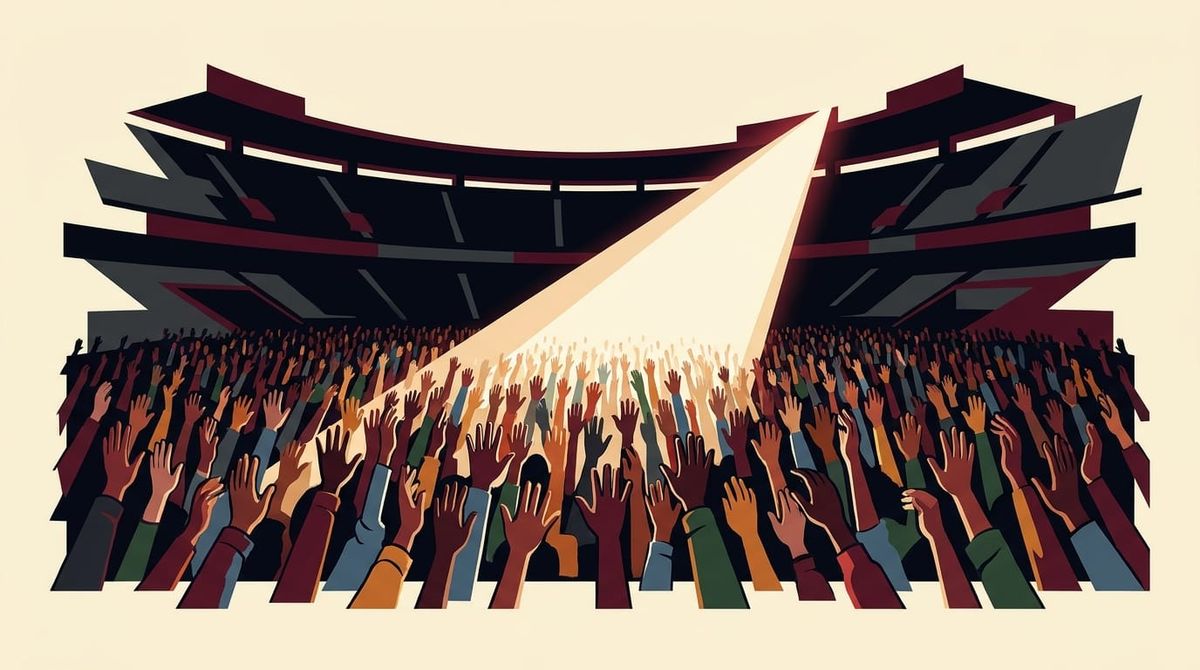
Something is happening in Australia's stadiums, streaming charts, and shopping aisles. It's quiet enough that many brands haven't registered it yet. But the data makes it hard to ignore.
K-pop group ATEEZ recently sold out a Sydney show where only 2% of the crowd was Korean. The other 98% were Australians who simply like the music. Punjabi pop artist Diljit Dosanjh sold 90,000 tickets across six Australian cities, headlining CommBank Stadium and AAMI Park. Bad Bunny sold out two Sydney dates with a Super Bowl set performed entirely in Spanish.
Taken one at a time, each of these looks like an outlier. Together, they point to something structural.
The Demographics Are Already There
Australia's population has been reshaping itself for years. Today, 75% of the country's annual population growth comes from culturally and linguistically diverse communities. The largest groups arriving are from India, China, the Philippines, and Vietnam. Most settle in Sydney and Melbourne, the two cities where marketing decisions get made.
For the first time on record, India-born residents (971,020 as of June 2025) have overtaken England-born residents as Australia's largest overseas-born population group. The Philippines-born population has grown 71.1% to 412,530. In total, 51.5% of Australia's 25.5 million people were either born overseas or have at least one overseas-born parent.
This is not a niche audience. It is the audience.
The Commercial Gap Is Wide Open
The commercial case is clear. Australia's multicultural audience represents over A$100 billion in consumer revenue. Migrant-Australian spending in the grocery sector alone is projected to add A$4.4 billion by 2025. And yet only 10% of culturally and linguistically diverse consumers say brands communicate with them in ways they can understand and relate to.
 Mission Media
That gap is both a failure of imagination and a missed revenue opportunity.
The entertainment industry has already figured this out. Live Nation data shows a 600% increase in Asia Pop shows in Australia between 2015 and 2024. TikTok Australia recorded 61 million K-pop views in the past 12 months. And 97% of Asia Pop fans in Australia and New Zealand say they want more Australian brands to partner with Asia Pop artists. Almost none do.
Looking for World-Class PR & Comms in APAC?
Tailored service packages for select brands and agencies.
Diaspora Communities Are the Engine, Not the Audience
The most important insight in all of this is one that most brand strategies have not yet absorbed: diaspora communities are not a passive audience waiting to receive messages. They are the engine driving the cultural moments reshaping mainstream Australia.
A Women's T20 cricket match between Australia and India, once considered a niche fixture, drew a record crowd of over 11,000 spectators. The campaign behind it reached 781,000 people and generated 32,718 clicks by connecting with diaspora pride rather than broadcasting generic sports messaging.
As Reg Raghavan wrote in Mumbrella: "The brands that build narratives with communities, rather than simply targeting them, will be able to unlock earned trust, cultural credibility and word-of-mouth that travels faster and further than any paid channel."
That is the gap between a brand that slaps its logo on a cultural event and one that actually belongs there.
The Window Is Narrowing
Brands that move early in this space have a specific structural advantage: new migrants have not yet formed preferences. They don't have a default bank, a default supermarket, or a default insurer. The first brand to earn their trust is often the one they keep.
Mission Media
That window is closing. Australia's first digital out-of-home advertising network targeting diverse communities launched in Sydney and Melbourne in July 2025, expanding to 250 screens with in-language advertising. The infrastructure is catching up. Competitors are waking up.
The question is not whether Australia's cultural economy has changed. It has. The question is whether your brand's strategy reflects the country that actually exists, or the one that used to.
Want to reach thousands of marketing and comms professionals across Asia?
Get your brand in front of industry decision-makers.
Partner with Mission Media →


