
Washington Threatens Trade Action Over Australia's News Tax
Australia's News Bargaining Incentive impacts APAC marcomms. Explore NBI levy, US trade risks, and media regulation shifts.

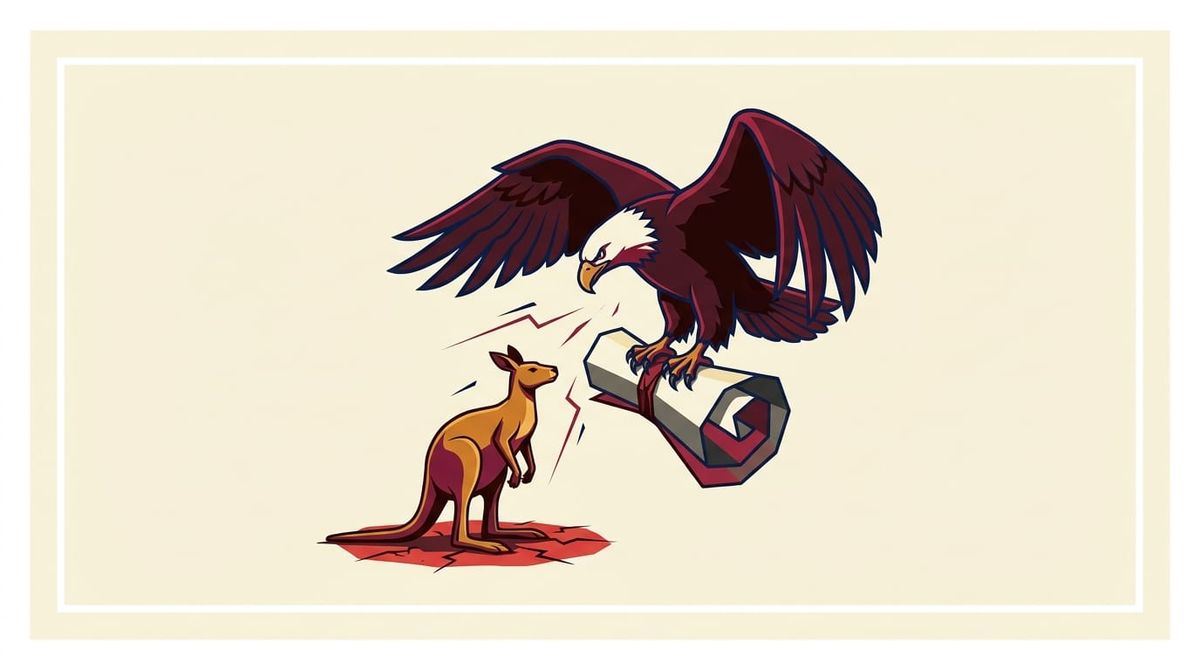
Washington just handed Australia's media policy battle a more dangerous opponent, and the implications for APAC marcomms operators extend well beyond Canberra.
On April 30, 2026, White House spokesperson Kush Desai declared that "President Trump is committed to defending America's leading technology sector from digital services taxes and other forms of foreign extortion". This marks the first time a US administration has publicly intervened in Australian domestic media legislation. The target: Australia's proposed News Bargaining Incentive (NBI), a 2.25% levy on the Australian revenues of large digital platforms that do not strike commercial deals with local publishers.
The APAC Stakes
This is not just an Australia story. For marcomms executives across Singapore, Tokyo, Seoul, and every other APAC market that depends on Meta and Google for audience reach, and on local publishers for earned media, the rules of the game are shifting without their input.
The CCIA (Washington's trade body for Meta, Google, and Microsoft) went beyond the White House, urging the US government to pursue "targeted trade remedies" if the NBI passes. That is not corporate lobbying. That is a formal escalation request for tariff retaliation against an allied nation's media regulation.
NBI Draft Legislation Details
Australia's NBI draft legislation, tabled April 28, captures platforms with more than A$250 million in local revenue. It hits Meta, Google, and TikTok while leaving Microsoft and Snapchat untouched. Google calls the exclusions "arbitrary." Meta calls the levy "nothing more than a digital services tax."
Prime Minister Albanese is not backing down. Australian media bosses have united behind the NBI, and legislation is slated for parliament by July 2026.
This is Australia's second attempt. The 2021 News Media Bargaining Code extracted A$140 million from Google and Facebook in its first year and generated 34 commercial deals. But Meta walked away cleanly in 2024 by shuttering its Facebook News tab. No rule was broken, and the leverage was gone. The NBI's mandatory levy is the patch: 2.25% is payable whether or not platforms carry news.
Canada's Cautionary Example
Canada's experience is the cautionary tale Canberra cannot ignore. When Ottawa passed its Online News Act in 2023, Meta did not negotiate. It permanently banned Canadian news. One year on, 85% of Facebook and Instagram news engagement for Canadian publishers had vanished, losses not offset by any other platform.
Australia's NBI architects argue the levy structure removes Meta's incentive to walk away. The tax lands regardless. But the White House's trade doctrine (applied against France, Canada, and the EU before Australia) introduces a variable the 2021 code never had to price in: sovereign US retaliation through tariffs and Section 301 investigations, well beyond media. Australia already absorbs a 10% US tariff surcharge on goods, with Section 301 reviews due in July 2026.
For APAC regulators and the marcomms industry watching from the sidelines, the structural message is blunt: any government in the region considering similar legislation now faces a two-front battle. It must contend with the platforms and with Washington's trade apparatus simultaneously.
Looking for World-Class PR & Comms in APAC?
Tailored service packages for select brands and agencies.
The Silence From Canberra
Nobody in Canberra is asking publicly what happens to cross-border PR distribution models if Meta exits Australian news. The NBI's formula distributes funds by journalist headcount, with a 170% offset for small publishers versus 150% for large ones. It is designed to rescue regional journalism. But if Meta's response is another news ban, it accelerates exactly the APAC news audience fragmentation that complicates every cross-border earned media strategy in the region. The CCIA calls the NBI "discriminatory in both design and effect". That is self-serving framing, but it is also the framing that will appear in any WTO challenge. APAC marcomms leaders should track what happens when Canberra calls Washington's bluff in July.
Want to reach thousands of marketing and comms professionals across Asia?
Get your brand in front of industry decision-makers.
Partner with Mission Media →


