
Ford CEO Pitches Chinese EV Joint Ventures to Trump Officials
Ford's CEO proposes allowing Chinese automakers US manufacturing through joint ventures, reversing Beijing's three-decade foreign partnership model. Trump officials signal cold reception amid Congr...

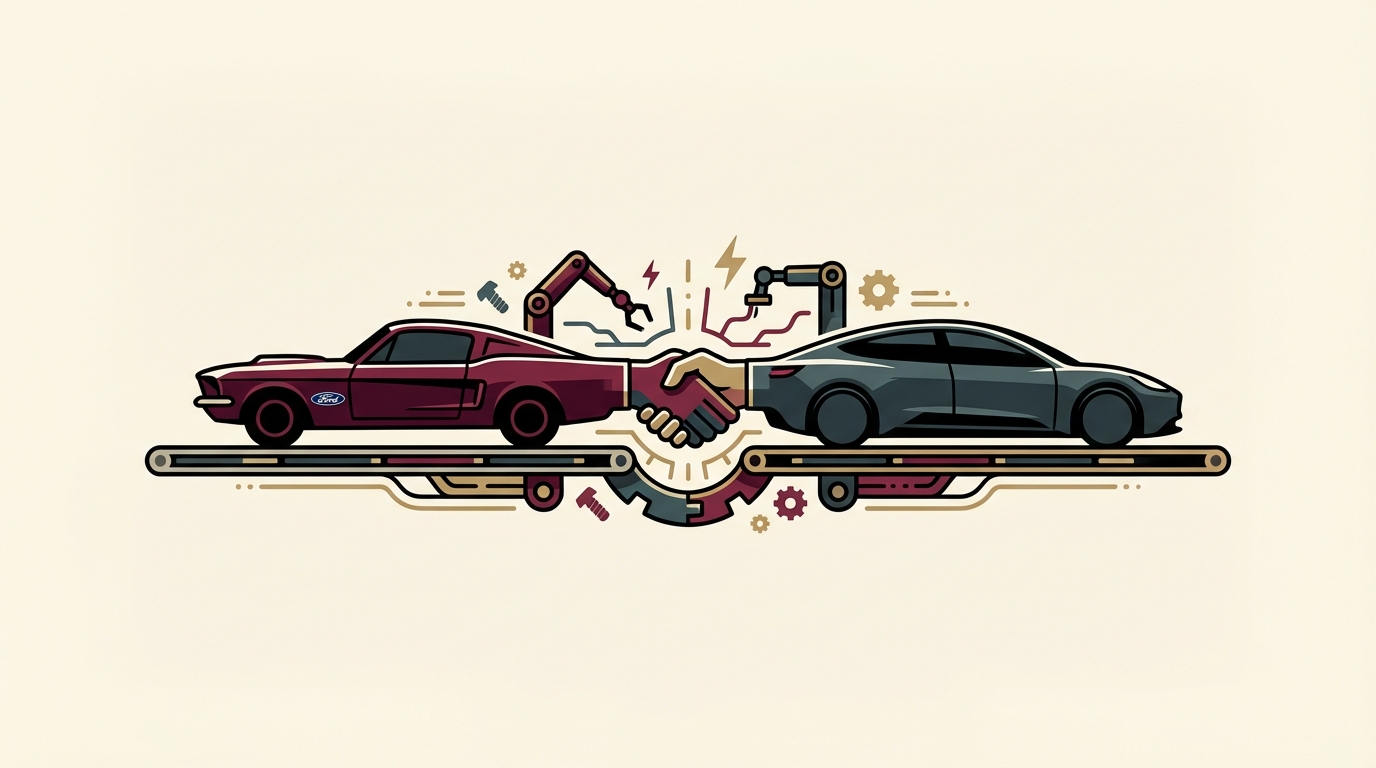
Ford Motor CEO Jim Farley met with senior Trump administration officials in January 2026 to discuss a framework that would allow Chinese automakers to manufacture in the United States through joint ventures with American companies holding controlling stakes. The discussions took place at the Detroit Auto Show with US Trade Representative Jamieson Greer, Transportation Secretary Sean Duffy, and EPA Administrator Lee Zeldin.
Proposed Framework Mirrors China's Historical Requirements
The joint venture structure would require American companies to maintain controlling stakes while sharing profits and technology with Chinese partners. This approach essentially reverses China's three-decade-old requirement that foreign automakers form partnerships with local companies to access the Chinese market.
The discussions followed President Trump's January 13, 2026 statement at the Detroit Economic Club, where he said, "Let China come in," if they built US factories and hired American workers. However, administration officials gave the proposal a cold reception, anticipating significant Congressional opposition on economic and national security grounds.
General Motors explicitly opposes allowing Chinese automakers into the US market. Chairman John Moolenaar of the Select Committee on China criticized Ford's China partnerships in February 2026, warning they favor China over US and allied partners.
Competitive Pressure Drives Partnership Discussions
The talks reflect mounting pressure as Chinese automakers expand globally with lower-cost, high-tech vehicles. Ford CEO Farley has called China's automotive capabilities an "existential threat," stating, "Their cost, their quality of their vehicles is far superior to what I see in the west."
 Mission Media
Chinese manufacturers like BYD offer models priced around US$8,000, supported by government subsidies and over 90% battery localization. Global light-vehicle sales increased just 1% in 2025, with growth concentrated in China and Asia offsetting declines in the US and Europe.
Ford maintains strategic partnerships with Chinese battery suppliers CATL and BYD. The company extended its CATL licensing agreement in 2025 for manufacturing lithium iron phosphate batteries in Michigan, with Congress preserving Ford's tax credit eligibility in July 2025 despite concerns about CATL's ties to China's military.
Canada announced a trade deal in mid-January 2026 allowing approximately 50,000 Chinese EVs annually at low tariffs, potentially pressuring US policy adjustments.
Existing Partnerships Demonstrate Integration Challenges
GM's China operations accounted for 42% of its 2025 sales, illustrating Western automakers' deep integration into Chinese supply chains. The company's joint venture renewal negotiations with SAIC target over 50% new energy vehicle sales by 2026 for profitability, with Chinese partners demanding greater control over product definition and technology.
Volkswagen established multiple China partnerships in 2025, including collaborations with XPENG for electrical architectures and Gotion for batteries achieving 50% cost cuts. Toyota announced a wholly-owned EV plant in Shanghai in February 2025 for Lexus production starting in 2027, following Tesla's precedent of operating without Chinese joint venture partners.
An investment deal similar to Ford's proposed framework could emerge from Trump's planned April meeting with Chinese President Xi Jinping, though current administration sentiment suggests significant obstacles remain.
Want to stay up-to-date on the stories shaping Asia's media, marketing, and comms industry? Subscribe to Mission Media for exclusive insights, campaign deep-dives, and actionable intel.