
Influencer Marketing's Equity Shift Stalls Despite Creator Platform Anxiety
Creators want ownership stakes, but brand adoption of equity partnerships remains minimal. Market demand simply doesn't match the narrative.

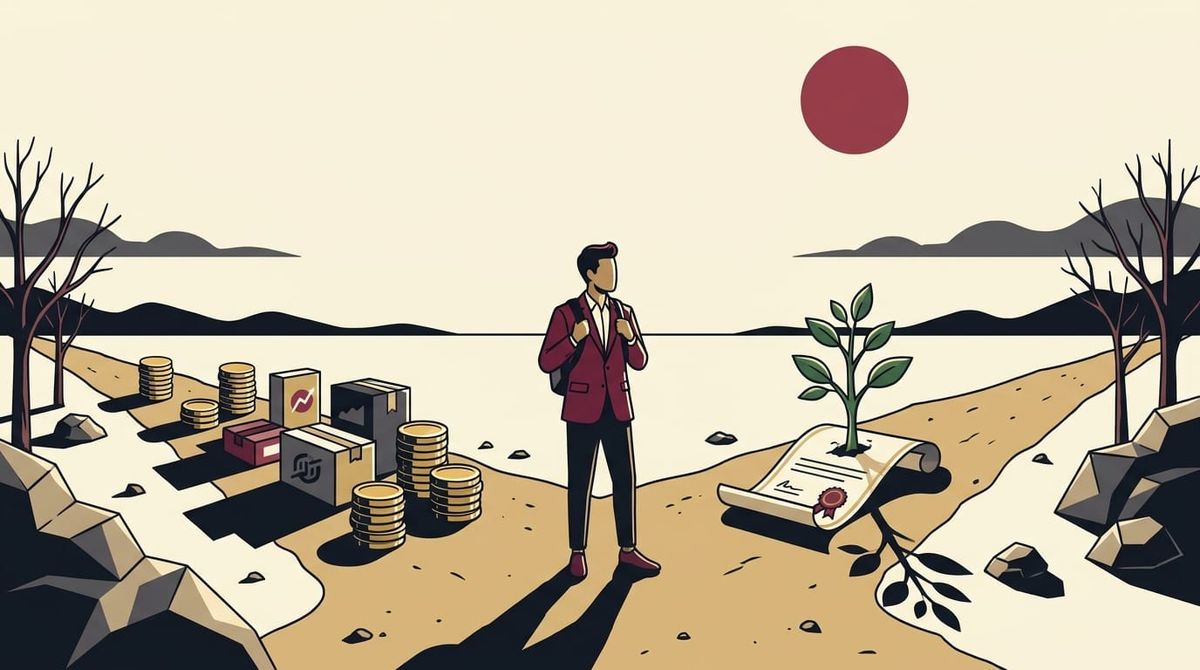
Influencer marketing is maturing, but the shift toward equity deals is happening far slower than the narrative suggests. Creator anxiety around platform dependence is real. But industry executives say structural demand for ownership partnerships simply is not there at scale.
Colin Rocker, a full-time content creator focused on career development and personal finance, recently made his first-ever investor deal with Favikon, a creator analytics platform. For Rocker, the decision came from one persistent concern.
"The anxiety is there in terms of, 'I am a creator, I have this big audience, I'm making great money, but Meta, LinkedIn or TikTok could flip a switch tomorrow and my audience is gone,'" Rocker said.
Rocker estimates 85% to 90% of his income comes from brand partnerships, including Microsoft, Adobe, Apple and Ally Bank. His investment in Favikon was a traditional seed deal, separate from his content work. He had previously completed a brand arrangement with the platform before Favikon raised its first seed round and offered him an investor opportunity. Financial terms were not disclosed.
For Rocker, the Favikon investment was the "biggest, probably single investment" he has ever made. He reviewed the platform's financial deck, consulted a financial advisor, and evaluated business health before signing. The experience, he said, was "really cool, but also very stressful." His return depends on Favikon going public, being acquired, or allowing private share sales.
A Market Built on Low-Cost Transactions
Despite growing creator interest in ownership models, the broader market has not followed. In the US, influencer marketing spend is expected to reach US$13.7 billion by 2027, according to eMarketer. Flat fees, performance-based payments, and product gifting remain dominant.
Some companies are structuring equity deals. Jeff Frommer, founder and CEO of OWM, a platform that helps creators strike equity partnerships with brands, says his team receives around five inbound requests daily from founders. OWM's deals combine cash, earned equity, revenue share, and performance-based incentives with vesting schedules.
But brand-side adoption is limited. David Huntzinger, SVP and talent manager at Night, said companies are "not en masse moving away from sponsorships in favor of equity partnerships," noting the model applies primarily to "early stage companies or those with low market penetration looking for scale."
Jennifer Quigley-Jones, founder and CEO of Digital Voices, was more direct: "It is a strategy that does not scale easily. We are not seeing this demand for mid-tier or micro creator partnerships."
Looking for World-Class PR & Comms in APAC?
Tailored service packages for select brands and agencies.
The Risk Calculus for Creators
The economics back that assessment. Nearly 80% of influencer collaborations cost under US$300, according to Collabstr's 2026 Influencer Marketing Report. The market runs on high-volume, low-cost transactions.
Danielle Wiley, CEO of Sway Group, summarized the risk: "That feels like a risk that most, certainly in this economy, most people are not able to take."
Rocker articulated the same tension from the creator side: "Giving that brand marketing assets that they can use today and run ads on today versus them exchanging you an IOU for 10 years in the future. It may be gone in a year or two."
Creator Appetite Outpaces Market Structure
65% of influencers want more involvement in creative or product development rather than following rigid briefs, according to Sprout Social's 2025 Influencer Marketing Report. That desire for deeper brand relationships is genuine. But for most micro-creators, the path forward looks more like platform diversification and owned channels than an equity stake on a cap table.
 Mission Media
Want to reach thousands of marketing and comms professionals across Asia?
Get your brand in front of industry decision-makers.
Partner with Mission Media →


