
Mondelez Hires Global Lead to Navigate AI Shopping Bot Era
Mondelez is building a dedicated team to compete in agentic commerce, where AI bots autonomously purchase products. With retailers projecting 30% bot-driven traffic by 2028, CPG brands must act now on product data strategy.

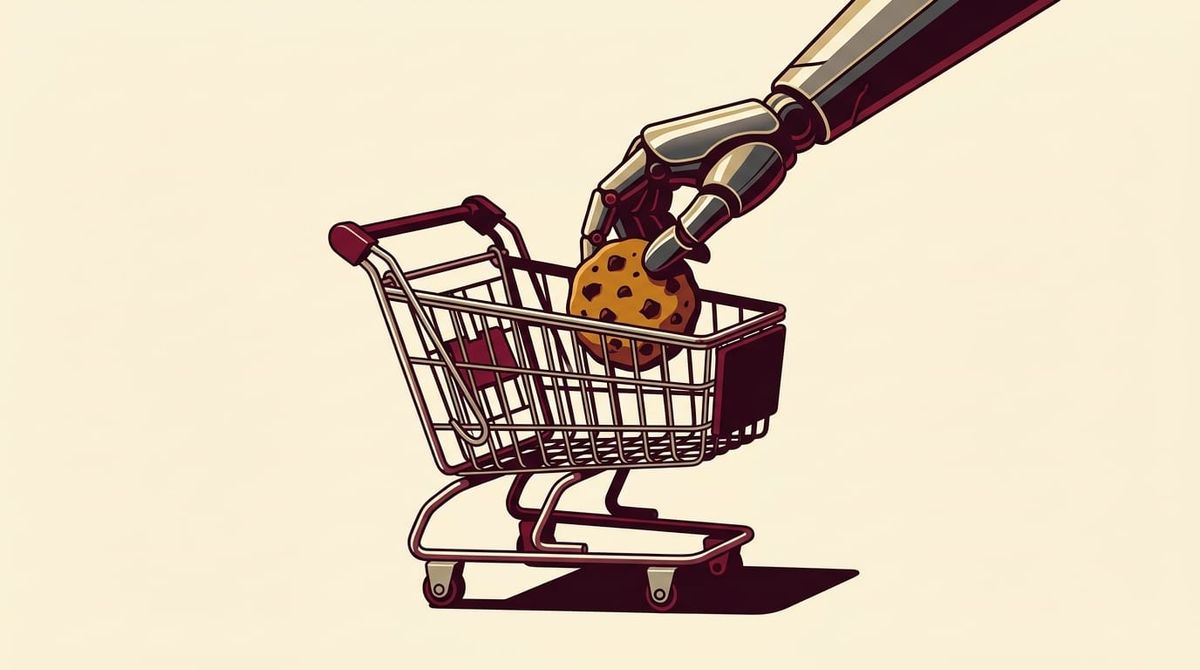
Mondelez International, the parent company of Oreo, Cadbury, and Sour Patch Kids, is recruiting a Global Lead of Emerging Commerce Platforms to lead its response to agentic commerce, a fast-developing model where AI bots shop and buy products automatically on behalf of consumers.
The role, based in East Hanover, New Jersey, carries a salary range of US$140,000 to US$193,000 annually, signaling a senior strategic investment rather than an exploratory hire.
Mondelez Responds to Projected Shift in Retail Traffic
Mondelez's retailer partners project that 30% of their site traffic will come from AI shopping agents by 2028. That figure is driving urgency inside the company.
Andrew Lederman, VP of Global Digital Commerce at Mondelez, described the shift publicly: "We're at the beginning of a fundamental shift in commerce, moving from clicks and channels to intelligent agents that guide decisions, discovery and transactions."
The new hire will build strategy and pilot programs across multiple platforms, covering product integration with tools like Amazon Rufus auto-buy, partner API development, and operational controls for pricing, assortment, and attribution.
A Fragmented Platform Race Is Already Underway
Major technology companies are moving quickly. Amazon's Rufus AI assistant includes an auto-buy feature that purchases products automatically at set price points. Google rolled out its Universal Commerce Protocol in 2025 to enable agentic shopping within its ecosystem. OpenAI launched, then pulled back from, an Instant Checkout feature inside ChatGPT after early results disappointed.
 Mission Media
Walmart's Sparky represents yet another proprietary agent operating independently from its competitors. This fragmentation means brands cannot rely on a single platform strategy. Each retailer's agent operates with different data requirements, attribution models, and purchasing behaviors.
McKinsey estimates the global agentic commerce market will reach US$3 trillion to US$5 trillion by 2030, with U.S. retail alone potentially generating up to US$1 trillion through agent-driven purchases. A more conservative estimate puts U.S. e-commerce spending through agentic platforms at US$190 billion to US$385 billion by 2030, representing 10% to 20% of total e-commerce.
Product Data Is Now a Competitive Asset
Industry experts say the near-term priority for CPG brands is not advertising creative but product data quality. AI agents make purchase decisions based on structured, machine-readable product information. Brands whose catalogs are incomplete or poorly tagged risk being invisible to agents searching for "healthiest chocolate option" or "best value snack."
Leah Sallen, Managing Director of Retail and Commerce Media at VML, recommends clients focus on generative engine optimization strategies to make product information discoverable by AI systems. This includes enriching product catalogs with verified attributes like sustainability certifications and accurate reviews.
The Model Context Protocol (MCP), a technical standard that allows AI agents to query real product data directly, is emerging as critical infrastructure for brands preparing for this shift. Some companies are already sending product data to OpenAI through MCP servers to ensure accurate agent responses.
Macy's, Gap, and Sephora are identified as early retail movers. Macy's introduced "Ask Macy's," an AI chatbot built around curated product discovery rather than traditional keyword search, illustrating that agentic commerce is already live in retail environments where CPG products are sold.
Looking for World-Class PR & Comms in APAC?
Tailored service packages for select brands and agencies.
Adoption Challenges Remain Despite Platform Investment
Consumer hesitation around completing purchases through AI agents remains a key obstacle. OpenAI's decision to pull back from Instant Checkout illustrates that platform capability is advancing faster than consumer behavior.
Mike O'Donnell, SVP of Innovation at Flywheel, noted that traffic remains the central concern, with the underlying question being whether consumers will change behavior to convert through AI-prompted recommendations.
Some industry observers have drawn comparisons to earlier technology cycles, including the metaverse and NFTs, where initial projections outpaced actual adoption. Lederman, however, framed the question as less about "if" and more about "when," with infrastructure, platforms, and market conditions continuing to align.
Mondelez has not announced a timeline for completing the hire or launching initial pilot programs.
Want to reach thousands of marketing and comms professionals across Asia?
Get your brand in front of industry decision-makers.
Partner with Mission Media →


