Why Studios Are Reclaiming Publishing to Deepen Franchise Control
Paramount launches in-house publishing to deepen franchise control across print, digital, and audio. Studios are reclaiming publishing to own their IP ecosystems.


Paramount Global launched a new in-house publishing division on April 8, 2026, just three years after selling major publishing house Simon & Schuster for more than A$2.3 billion.
The new unit, called Paramount Global Publishing, will produce print, digital, and audio books based on Paramount's existing franchises and original stories. It will initially launch in the US and Canada, with expansion to other markets planned.
Division Structure and Stated Goals
The publishing unit sits within Paramount's Products and Experiences division, alongside toys, theme parks, and live events. An external distribution partner will handle sales, though Paramount has not yet named that partner.
 Mission Media
Josh Silverman, president of the Products and Experiences division, said: "Stories that originate on the page have a unique power to build immersive worlds, create compelling characters and forge deeper connections with fans."
Paramount already generates US$1.3 billion quarterly from licensing its franchises, including SpongeBob SquarePants and NCIS, to rival platforms. The publishing division adds a direct content ownership layer on top of that existing licensing business.
Competing Models Emerge Across the Industry
The Paramount announcement coincides with a separate deal between Fox Entertainment Studios and HarperCollins imprint Avon A. That arrangement is structured as a two-way, first-look development deal, where Fox programming is adapted into books and Avon A titles are developed into film and television.
The Fox model uses a partnership structure. Paramount's model keeps publishing fully in-house, with only distribution outsourced.
Warner Bros. Discovery offers a cautionary contrast. After pursuing aggressive content exclusivity, the company experienced subscriber losses and negative cash flows, and later reversed course toward broader licensing. Paramount's decision to retain an external distribution partner, rather than build full vertical control, appears to reflect awareness of that outcome.
Leadership Change Coincides With Announcement
The publishing launch coincided with the departure of Paramount president Jeff Shell, who assumed the role in August 2025 following Skydance's acquisition of Paramount.
Mission Media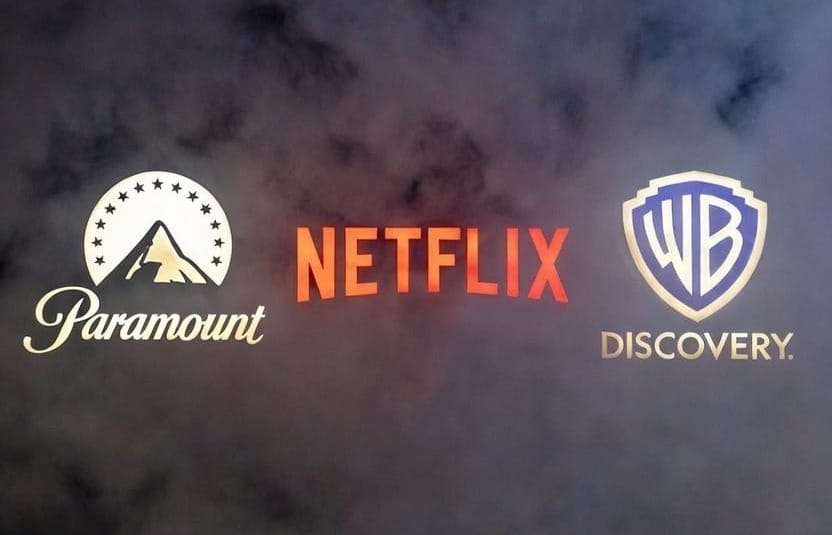
Shell stepped down amid a lawsuit filed by high-stakes gambler RJ Cipriani, who alleges Shell shared insider information related to Paramount's UFC deal and a potential Warner Bros. Discovery merger. An internal investigation found no securities law violation. Paramount stated the facts "demonstrated that these allegations do not establish a securities law violation" and called the claims "frivolous and baseless."
Paramount also noted Shell "promptly notified PSKY of these accusations and is taking forceful legal action."
Looking for World-Class PR & Comms in APAC?
Tailored service packages for select brands and agencies.
Industry Backdrop
The entertainment industry is undergoing significant consolidation. Netflix has entered a definitive agreement to acquire Warner Bros. Discovery at US$82.7 billion in enterprise value. Paramount separately submitted a competing hostile takeover bid at a higher per-share price.
In this environment, owning IP across more formats gives studios greater negotiating leverage in any merger or acquisition scenario. Paramount's new publishing division creates original stories in addition to franchise extensions, expanding its owned IP portfolio without a major acquisition.
The division's placement within Products and Experiences, rather than within content or streaming, signals that publishing is being treated as a brand extension and audience engagement tool alongside Paramount's existing consumer products business.
Want to reach thousands of marketing and comms professionals across Asia?
Get your brand in front of industry decision-makers.
Partner with Mission Media →