
Why Australian Publishers Are Abandoning Platform Dependencies
Australian publishers abandon platform dependency as Meta cuts deals and AI erodes traffic. Direct subscriptions now replace platform-driven revenue.

Australia's publishing industry gathered at Sydney's State Library in late October 2025 for a frank conversation about money. Not strategy documents or roadmaps. Real survival math.
Will Hayward, Zara Curtis, and Toby Hemming sat on stage at Mumbrella Publish 2025 to discuss one of the most pressing questions in media today: how do you keep journalism alive when the business model that funded it for decades is falling apart?
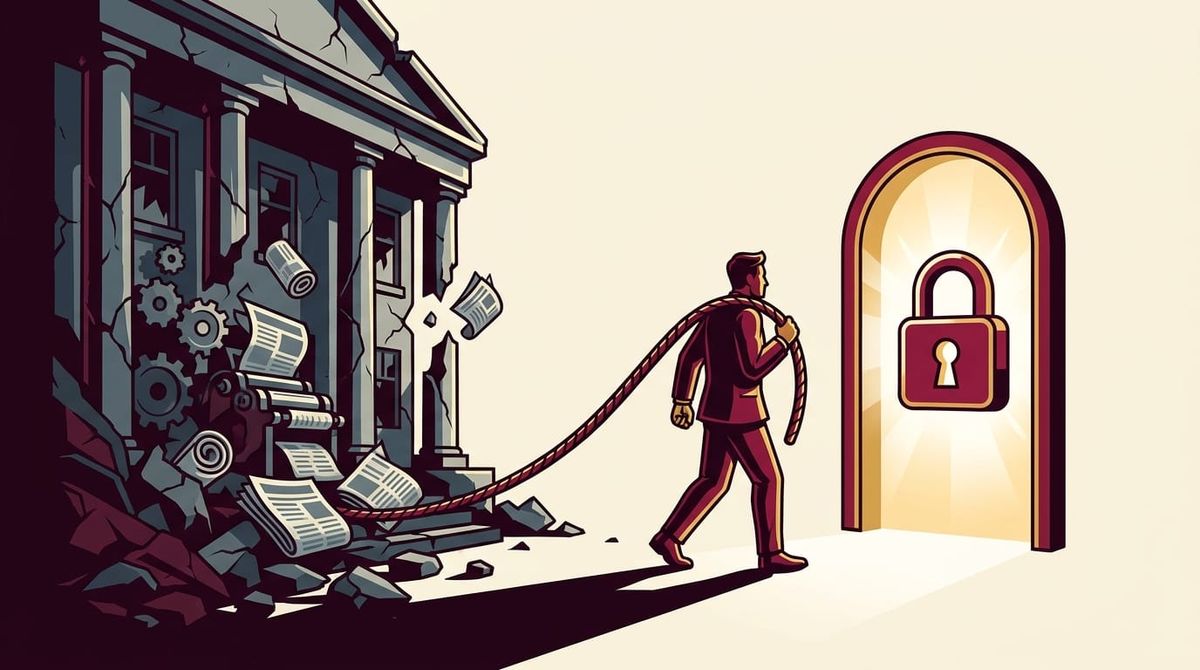
The answer that emerged was blunt. Take back control. Stop depending on platforms. Own your audience directly.
The Advertising Collapse Is Not a Blip
The numbers behind this conversation are stark. Australian newspaper publishing revenue is now contracting to around A$2.8 billion, shrinking at roughly 5% per year since 2020. Newspaper ad revenue dropped another 17.4% in 2025 alone.
 Mission Media
That is not a temporary dip. That is a structural collapse.
Meta stopped renewing commercial deals with Australian publishers when those deals expired in late 2024, cutting off one of the last meaningful streams of platform-driven traffic. The News Media Bargaining Code, which forced Google and Facebook to pay for news, does not cover AI platforms. As AI-powered search summaries become the default way people discover stories, the code that was supposed to protect publishers is already becoming obsolete.
A University of Sydney study examined 434 AI-generated news summaries from Microsoft Copilot and found only about one-fifth featured Australian media outlets. AI summaries are estimated to reduce publisher traffic by 20-60% on average globally, causing roughly US$2 billion in annual advertising revenue losses across the sector.
Looking for World-Class PR & Comms in APAC?
Tailored service packages for select brands and agencies.
What "Sovereignty" Actually Means in Practice
The phrase that kept coming up at the Mumbrella panel was sovereignty. Publishing executives said they are "coming back to the data, to the walled garden, to what we can control."
This is not nostalgia for the pre-internet era. It is a specific business decision: stop optimizing for platform algorithms and start investing in direct relationships with paying readers.
Will Hayward's Private Media (which publishes Crikey and Smart Company) built a revenue model that is roughly 50% subscriptions, 40% advertising, with the rest coming from events, licensing, and Bargaining Code payments. Reducing advertising below 50% was deliberate. It was a bet that editorial independence requires financial independence from advertisers.
Hayward has since departed the company, replaced by Russ Horell. Whether that revenue philosophy continues under new leadership is an open question.
Mamamia's Zara Curtis made a similar argument from a different angle. "Being relevant and trusted is a critical driver of our growth," she said. Under her leadership, Mamamia has launched four new content verticals targeting women at key life moments: work, birth, divorce, and women's health. The company is moving toward a "house of brands" model with shoppable content built in.
Guardian Australia has gone further than most. Reader subscriptions and one-off payments now account for 64% of its revenue. A decade ago, that would have been unthinkable for a publication that gave its content away free.
The AI Bet Is Not Settled
The AI question sitting underneath all of this is unresolved. Globally, 97% of publishers plan to increase AI investment this year, with three-quarters directing that spending at editorial tasks. Publishers are using the same technology that is eroding their traffic to try and reduce costs.
Mission Media
Meanwhile, at least one Australian lifestyle publisher has already licensed its content to an AI platform. Its founder described the decision plainly: "Attribution matters more than revenue." That framing signals a split that is coming for the wider industry. Some publishers will cut commercial AI deals. Others will hold the line on editorial grounds.
Toby Hemming of Little Black Book brought branded content into the picture. As traditional advertising formats lose effectiveness, brand-funded editorial is quietly filling some of the gap. For marketing executives in APAC who rely on trusted media environments to reach professional audiences, this shift in how publishers think about commercial partnerships is worth watching closely.
The subscription ceiling is also real. 77% of commercial publishers globally say subscriptions are a top priority, but the industry is acknowledging that growth has plateaued. Subscriptions alone cannot replace what advertising once provided. The next revenue model has to be built on something more than paywalls.
What Mumbrella Publish 2025 made clear is that the media industry has stopped waiting for the situation to improve. It is engineering its way out, one ownership structure and content vertical at a time.
Want to reach thousands of marketing and comms professionals across Asia?
Get your brand in front of industry decision-makers.
Partner with Mission Media →


