
Six Major Spirits Brands Launch Sports Sponsorship Blitz
Six of the world's biggest whisky and bourbon brands have launched sports sponsorships within weeks of each other—and the timing reveals a deeper strategy to recruit younger drinkers amid shrinking markets.

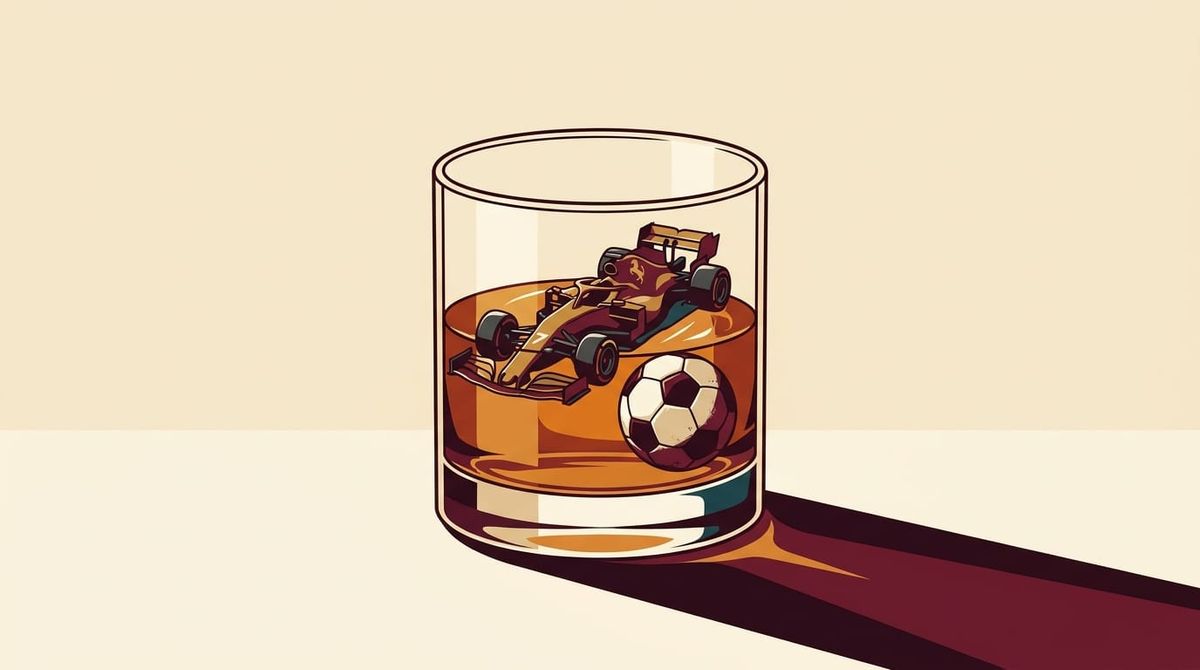
Six of the world's biggest whisky and bourbon brands have launched sports sponsorships within weeks of each other. The timing is no accident.
Chivas Regal, Jack Daniel's, Jameson, Jim Beam, Maker's Mark, and Johnnie Walker have all activated around the same two sporting moments: the ongoing Formula 1 season and the FIFA World Cup 2026. Each campaign follows the same basic formula: attach the brand to a beloved athlete or team, drop a limited-edition bottle, and hope younger drinkers take notice.
The challenge driving all of this is straightforward. The pool of new drinkers that premium spirits brands need to recruit is getting smaller, and the competition for that shrinking audience is getting fiercer.
The Problem Every Spirits Brand Shares Right Now
Premium spirits brands can't just sell to their existing fans forever. They need to constantly recruit new ones to grow. The trouble is that younger consumers today are less likely to drink than previous generations, and many don't have the money for expensive bottles either.
This isn't a single brand's problem. As Kristen Colonna, VP of marketing at Jameson, put it: "On a brand as big as Jameson, you're constantly retaining your base while recruiting the next generation of fans."
Sports and celebrity partnerships have become the go-to answer because they solve two problems at once. They put the brand in front of a big audience. And they link the product to a moment worth drinking for.
What Each Brand Is Actually Doing
The campaigns are varied in approach but share the same underlying logic.
 Mission Media
Chivas Regal has taken perhaps the most creative angle. The brand sponsors Ferrari's F1 team and built its campaign around driver Charles Leclerc, creating a 16-year-old Scotch that nods to Leclerc's driver number. The brand also made a bespoke board game called "SE!ZE" (another reference to the number 16) that will appear at Grand Prix pop-ups. Oyin Akiniyi, Chivas Regal's global brand director, said the goal was to "flip the sponsorship rule book" by creating original content rather than just putting a logo on a car.
"Our strategy has always been to be additive and add value to fan experiences, to fan culture, and give them something that they can't get anywhere else," Akiniyi said.
Maker's Mark went in a different direction, partnering with WNBA star and Olympic gold medalist Kelsey Plum to create a limited-edition bourbon. The brand also sponsors the Unrivaled three-on-three women's basketball league. Regan Clarke, VP of American Whiskey Brands at Suntory Global Spirits (Maker's Mark's parent), was direct about the rationale: "Women's basketball isn't niche culture anymore. It is culture."
Jameson leaned into soccer's cultural power by signing Colombian reggaeton star J Balvin alongside NYC designer KidSuper for its MLS campaign, targeting Hispanic consumers ahead of the World Cup. Jack Daniel's launched a US$600 limited-edition bottle built from actual McLaren F1 racing materials. Jim Beam is the official spirits partner of the US Soccer Federation, and has featured soccer legend Tim Howard in its campaign. Johnnie Walker created a Brazil-exclusive 24-year-old blended Scotch for the World Cup, with a campaign fronted by former Brazil captain Cafu. The number 24 represents Brazil's 24-year wait since their last World Cup win in 2002. The bottle isn't sold in stores but used for brand activations and a charity auction.
Looking for World-Class PR & Comms in APAC?
Tailored service packages for select brands and agencies.
The Crowding Problem No One Is Talking About Loudly Enough
Here's the tension sitting underneath all this activity. Everyone is using the same playbook at the same time.
F1-adjacent sponsors now have to compete against dozens of other brands attached to each of the sport's 11 teams, fighting for attention across 24 races a year. Sponsors collectively put US$2 billion toward F1 teams last year, with total investment projected to exceed US$3 billion in 2026. Rebecca Gordon, co-founder of creative agency Baby Teeth (the firm behind Chivas's campaign), acknowledged the squeeze: "Suddenly that's starting to look quite crowded, and it's all coming through the same feed."
Ryan Bailey, Senior Strategy Director at brand consultancy Redscout, argues that the real play here isn't about the sport itself. "It's not about the sport, it's about fan culture. [Distillers] aren't marketing whiskey through sports. They're really selling fandom that happens to be 80 proof."
Bailey also pointed to limited-edition bottles as a way for brands to escape the comparison trap. Instead of competing with other whiskeys on price or taste, a US$600 Jack Daniel's McLaren bottle competes with a racing team's official merchandise. The bottle becomes a cultural object, not just a drink.
What This Means for Asian Marcomms Professionals
Formula 1 and the FIFA World Cup both carry significant followings across Singapore, Japan, South Korea, and Southeast Asia, which means these global campaigns will land in Asian markets too.
Mission Media
Ami Lawson, Managing Director at food and beverage agency Quench, captured what the shift actually looks like from the inside: "The brands gaining traction right now are acting less like traditional liquor companies and more like modern cultural brands. They're tapping into passion points, showing up in entertainment and sports culture and creating experiences consumers actually want to engage with."
For any brand trying to reach a younger audience in Asia, the lesson from this wave of spirits campaigns is clear. It's less about what you sell and more about what moment you help people belong to.
Want to reach thousands of marketing and comms professionals across Asia?
Get your brand in front of industry decision-makers.
Partner with Mission Media →


