
WPP's Creative Consolidation Sparks Industry Debate on Brand Architecture
WPP's unified brand strategy faces criticism from Mark Ritson as reactive cost-cutting. The debate reveals how AI and portfolio management are reshaping agency brand architecture in Asia.

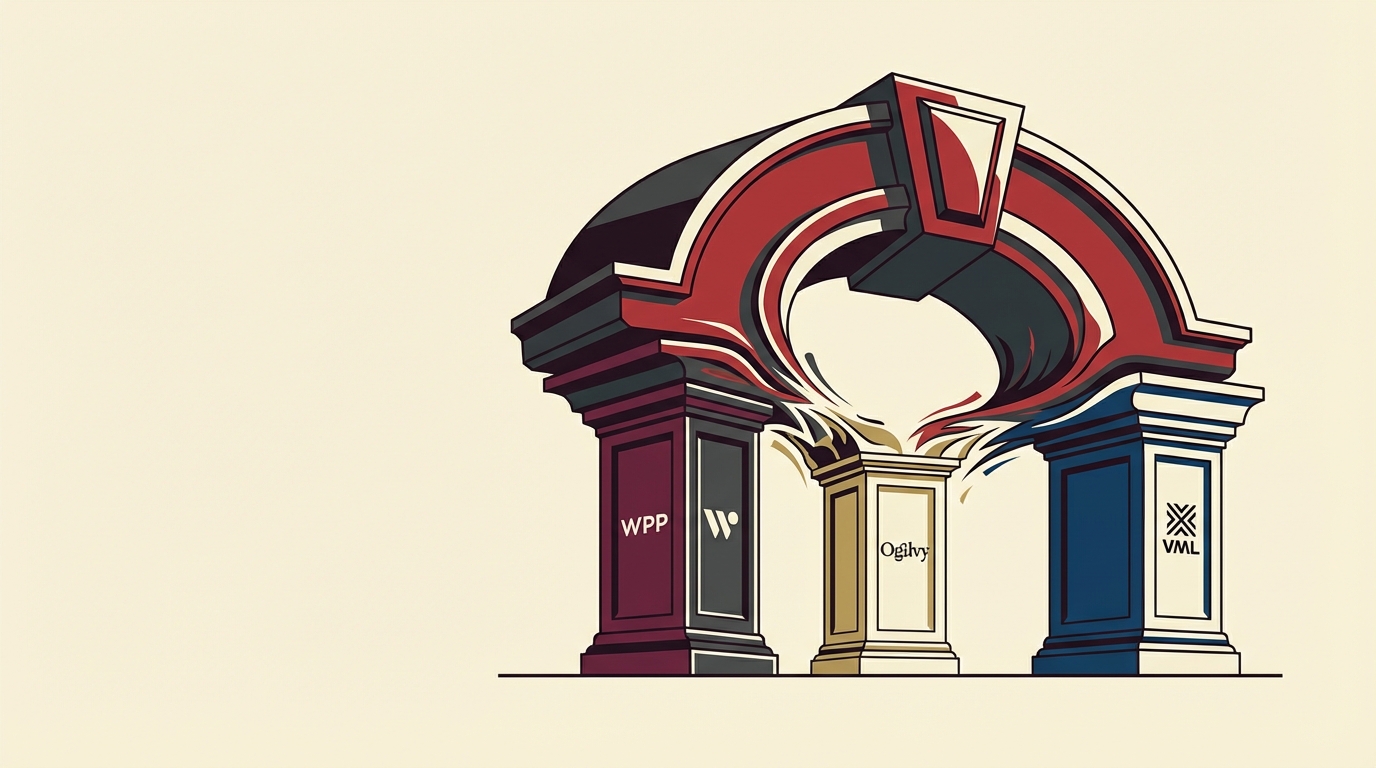
WPP's 2025 consolidation of Ogilvy, VML, and AKQA under a unified WPP Creative brand has sparked a public industry debate, with marketing analyst Mark Ritson characterizing the move as reactive cost-cutting rather than coherent brand strategy, a critique now reverberating across Asia Pacific.
Ritson Labels WPP a "Third Wheel" After Consolidation
Ritson named WPP's restructure one of the top marketing moments of 2025, arguing the company cannot simultaneously operate as a unified brand and a collection of distinct agency brands. He described the move as "chronic restructuring rather than a coherent shift to a unified operating brand" and positioned WPP as a third wheel behind Omnicom and Publicis in the current agency landscape.
WPP CEO Cindy Rose has publicly defended the decision, framing it as a deliberate evolution from a holding company model toward a unified operating brand. Brand strategists call this a "Branded House" approach, where one parent brand leads over individual sub-brands.
Ritson also cited Omnicom's 2025 reorganization as another defining industry moment, suggesting the entire holding company model is under simultaneous pressure globally.
A 1996 Framework Under Scrutiny in 2026
The debate centers on a brand architecture model developed by David Aaker in 1996, which asks companies to choose between a "Branded House" (one dominant parent brand) and a "House of Brands" (distinct, independent sub-brands). Critics now argue this framework was built for a world where creating new brands was expensive and slow.
 Mission Media
Industry commentary published in 2025 acknowledges Ritson's critique has merit but contends that both sides of the debate are applying an outdated map to a changed landscape. With AI tools enabling brands to be created in hours at minimal cost, the real challenge is managing large brand portfolios efficiently, not simply deciding where each brand sits on a 30-year-old spectrum.
WPP's planned rollout of its Open Intelligence AI platform by late 2025 is identified as a structural factor compressing the margins that historically justified running Ogilvy, VML, and AKQA as genuinely separate businesses.
Local Brand Loyalty Complicates the Case in Asia
The consolidation debate carries particular weight in Asia Pacific, where consumer behavior runs counter to the logic of global brand unification.
89% of Chinese consumers prefer local brands, with that figure reaching 81% across Southeast Asia. In markets where consumers demonstrably favor locally distinct identities, merging globally recognized agency names under a Western parent brand risks reducing rather than building commercial relevance.
Malaysian brands collectively grew 16% in aggregate value to US$59.1 billion, providing quantified evidence that portfolio approaches maintaining distinct brand identities can generate measurable returns in Asian markets.
Damian Borchok, Managing Director of Koto Sydney, has argued that APAC is at a "precipice" and that marketing leaders must "abandon Western playbooks for culturally rich, collaborative architecture that builds with regions, not for them."
Looking for World-Class PR & Comms in APAC?
Tailored service packages for select brands and agencies.
Independent Studios Gain Ground as Networks Consolidate
As WPP consolidates upward, a different competitive pattern is emerging in Asia. Independent studios including China-based Meat Studio and Singapore and Malaysia-based Vantage Branding are displacing legacy network agencies by building brand systems that reflect regional diversity rather than applying global templates.
Industry observers document a gradual retreat of legacy holding company networks across Asia, as locally born agencies compete on cultural fluency and speed rather than network scale.
Asia is projected to be home to the world's top economies by 2035 and currently represents 60% of global population, creating structural pressure for brand architecture frameworks to be rebuilt around Asian market dynamics rather than adapted from Western models.
WPP has not announced a revised timeline or additional structural changes following the public debate.
Want to reach thousands of marketing and comms professionals across Asia?
Get your brand in front of industry decision-makers.
Partner with Mission Media →