
One Chief, Six Brands: WPP's New Creative Operating Model
WPP consolidates EMEA creative leadership under one executive. How the operating system model balances agency independence with regional control under Elevate28 restructuring.

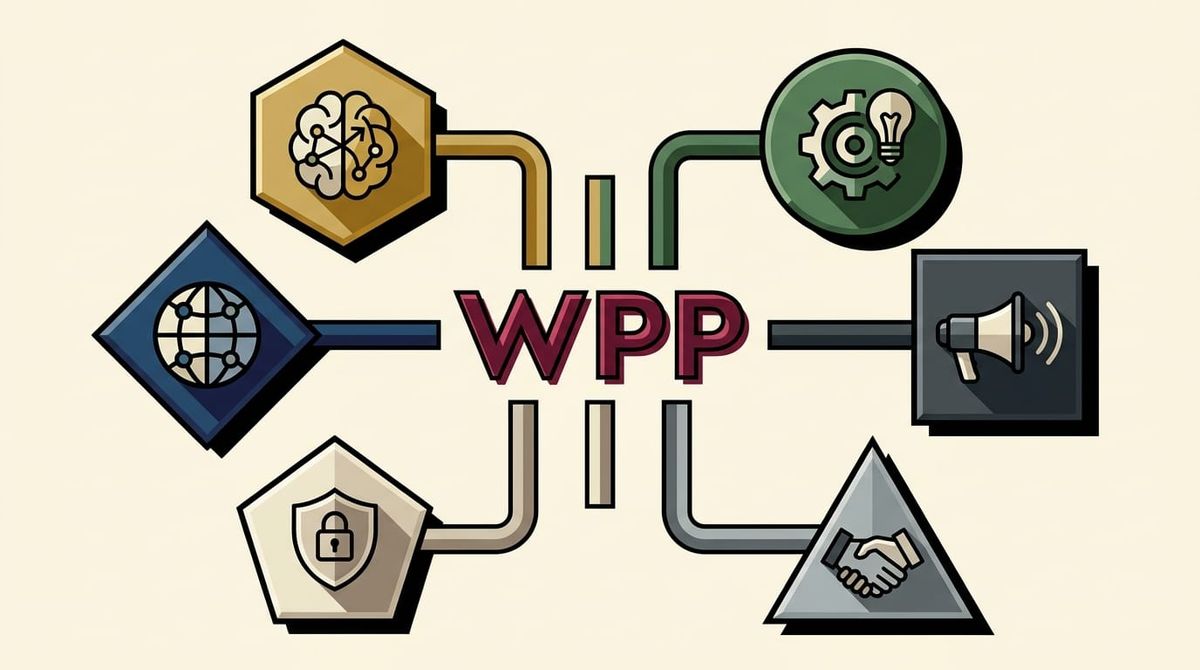
WPP has appointed Ewen Sturgeon as EMEA Chief Executive of WPP Creative, effective April 29, 2026. Sturgeon, who previously led the EMEA business of VML, will now oversee six agency brands across the region: VML, Ogilvy, Burson, AKQA, Landor, and Design Bridge and Partners. He reports to Jon Cook, Global CEO of both WPP Creative and VML.
The appointment replaces multiple regional agency chiefs with a single executive layer. The logic: keep agency brand identities intact while consolidating regional leadership under one voice.
One Role Replaces Many
The clearest signal of what this change means comes from what happened alongside it. Patou Nuytemans, who spent 30 years at Ogilvy and served as its EMEA CEO, is leaving at the end of May. Her role will not be filled. The job disappears, absorbed into Sturgeon's new position.
In the UK, James Murphy (CEO of Ogilvy Group UK) now has two reporting lines: Sturgeon and Laurent Ezekiel, who leads Ogilvy globally. It is the kind of matrix structure that tends to follow consolidations. Agency teams keep their brand identities but share a single regional voice at the leadership level.
Jon Cook described it plainly: "WPP Creative is not an agency. It is an operating system that lets those great agencies operate together." The goal is enabling collaboration without forcing the agencies to formally merge.
The Elevate28 Context
This appointment is one piece of a much larger plan. WPP's Elevate28 strategy, announced in February 2026 by CEO Cindy Rose, restructures the entire company into four operating units: WPP Creative, WPP Media, WPP Production, and WPP Enterprise Solutions. Rose declared, "We are no longer a holding company." The strategy targets £500 million (around US$676 million) in annual cost savings, with roughly £400 million in restructuring costs to get there.
The timing matters. WPP's revenue fell 8.9% in Q1 2026. Management is calling this an expected part of the plan's first "Stabilise" phase. Outside observers noted that Rose did not appear on the earnings call, an unusual absence for a CEO navigating a public reset. Adweek reported on the oddity.
Looking for World-Class PR & Comms in APAC?
Tailored service packages for select brands and agencies.
What Happens Beyond EMEA
The EMEA move is not happening in isolation. WPP has simultaneously appointed a Japan executive to lead WPP Creative across Asia Pacific and named Hephzibah Pathak, CEO of Ogilvy India, as WPP Creative India CEO. All four operating regions are getting the same regional umbrella structure at the same time.
Some analysts are skeptical about whether this helps clients or quietly signals the eventual fading of the individual agency brands. WPP says the brands stay. Others see a pattern from recent history. VML itself was formed in 2024 by merging Wunderman Thompson and VMLY&R, a deal Sturgeon navigated from the Wunderman Thompson side.
The competitive pressure is real. The Omnicom-IPG merger, completed in late 2025, pushed WPP out of its position as the world's largest advertising group. Dentsu reported a 328 billion yen loss and replaced its CEO. The whole industry is in motion, and WPP is betting that a more integrated structure will help it compete faster than the old holding company model.
Whether the operating system model delivers for clients remains to be seen. For now, EMEA has one creative chief where it used to have several.
Want to reach thousands of marketing and comms professionals across Asia?
Get your brand in front of industry decision-makers.
Partner with Mission Media →


