Why Zoom Pitches Are Killing Creative Collaboration at Ad Agencies
Competitive Zoom pitches are destroying creative collaboration at ad agencies, with 67% of marketers reporting measurable quality declines. A structural fix is emerging.

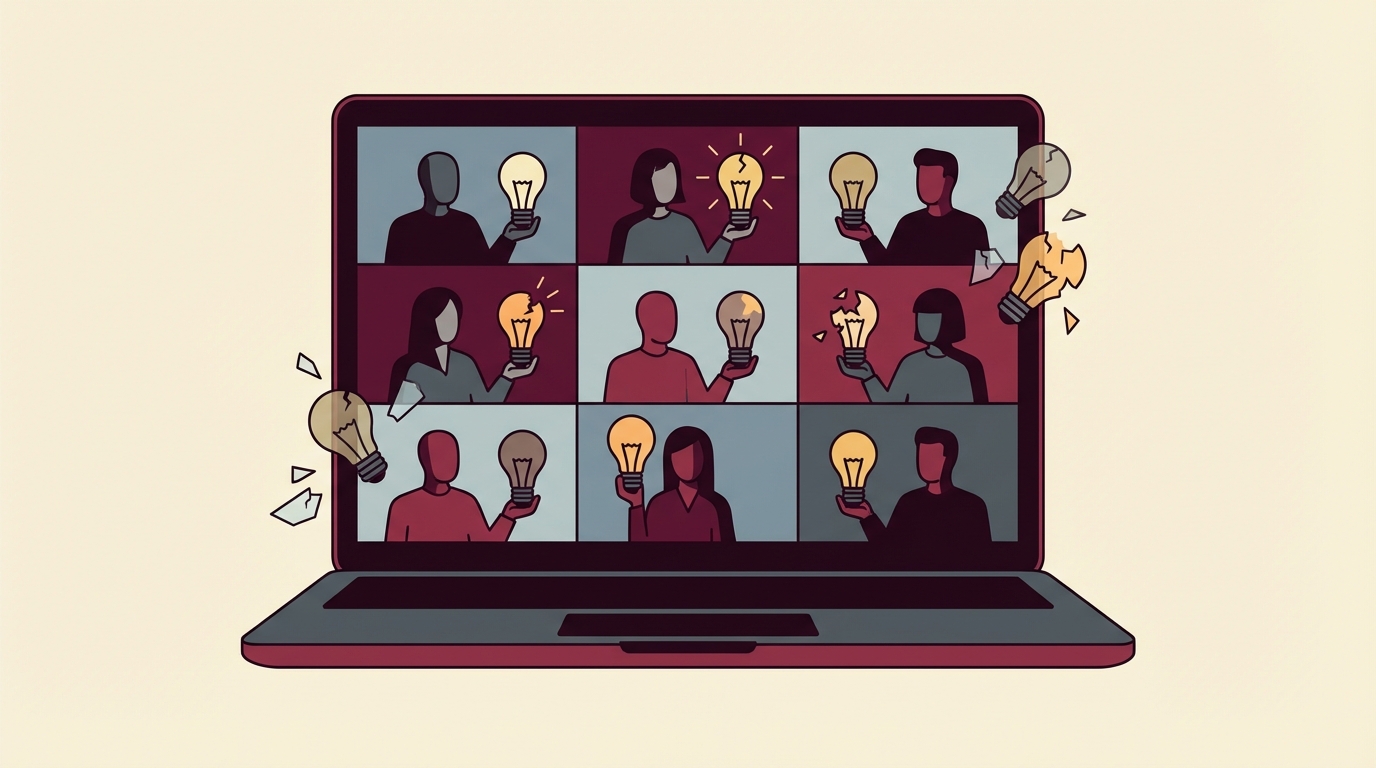
Ad agencies across global and Asia-Pacific markets are confronting a documented breakdown in virtual creative collaboration, as research confirms that competitive Zoom-based pitch sessions are generating systemic waste and measurable declines in creative output quality.
The findings point to a structural problem that goes beyond tool choice or remote work preferences.
Undefined Roles and Competitive Dynamics Are Undermining Virtual Pitches
A recurring pattern has emerged across global ad agencies. Multiple freelance creative teams join a single Zoom call to pitch ideas simultaneously, with participants often unintroduced and roles undefined. Creatives present concepts to strangers of varying seniority, knowing their ideas will be judged against competing teams in the same session.
 Mission Media
One experienced freelance creative described the dynamic as "giving away IP to your competitors while showing them the tricks of your trade." The model benefits agencies financially through markups passed to clients, but produces significant waste. With four competing teams of two people each working toward a single project, the majority of creative hours go unpaid and unproductive.
Research confirms this is not anecdotal. 67% of US marketers and 71% of UK marketers report that creative collaboration measurably suffers without shared physical space. 52% of marketers cite unproductive meetings as a core challenge in remote creative environments.
The Commercial Cost of Process Dysfunction
The creative quality consequences are now visible at the client level. 55% of North American marketers cite poor creative as their primary reason for rejecting agencies, ahead of lack of category experience at 48%.
The creative effectiveness gap compounds the problem. Only one in five award-winning campaigns delivers measurable commercial results, exposing a fundamental flaw in high-volume competitive brainstorm systems that prioritize billable hours over focused, accountable work.
Agency professionals themselves identify inefficient processes as their single biggest operational challenge. 63% to 66% of marketers report longer working hours under remote and hybrid models, yet this increase correlates with process dysfunction rather than improved creative output.
A Leaner Team Model Offers a Documented Alternative
Practitioners and researchers are pointing to a simpler organizational model as a direct response to these failures. The "project team" approach, used at agency HHCL in the 1990s and adapted from Chiat Day in New York, structured creative work around five people: two creatives, one planner, one account director, and one producer.
Mission Media
Under this model, ideas advanced to creative directors only after full team review. The planner and account perspectives were integrated before any client presentation. The practitioner who documented this model reports producing significantly more completed, launched work under it than under modern competitive multi-team systems, where work across multiple agencies was paid for but never launched due to brief changes and internal client decisions.
The model does not require physical proximity or agency infrastructure, making it directly applicable to distributed teams across markets from Singapore to Tokyo to Mumbai.
Looking for World-Class PR & Comms in APAC?
Tailored service packages for select brands and agencies.
Tool Investment Without Organizational Design Will Not Fix the Problem
Virtual collaboration platforms including Zoom Workplace now offer AI-generated meeting summaries, automated action items, and real-time whiteboard tools. These address documentation gaps but not the upstream structural problems of undefined roles and competitive team dynamics.
84% to 87% of CMOs report high training needs for remote creative collaboration, signaling an organizational design gap rather than a technology gap. Centralized workflow solutions that replace fragmented tools and disconnected processes have been shown to reduce cycle times by up to 40%, but only when paired with clear role accountability.
Research on virtual brainstorming best practices recommends "brainwriting," where individuals generate ideas independently before group sharing, as a structural mechanism to prevent dominant voices from suppressing quieter contributors. This directly counters the competitive dynamic in multi-team agency pitches.
For Asian marketing leaders managing distributed creative teams, the data points to the same conclusion. Workflow tools are available. The missing element is the organizational design to make them effective.
Want to reach thousands of marketing and comms professionals across Asia?
Get your brand in front of industry decision-makers.
Partner with Mission Media →