
Australia Launches First National Campaign on Perimenopause
Australia's government launches its first national perimenopause awareness campaign via Ogilvy, targeting women 35-55 with a normalized, destigmatized conversation approach.

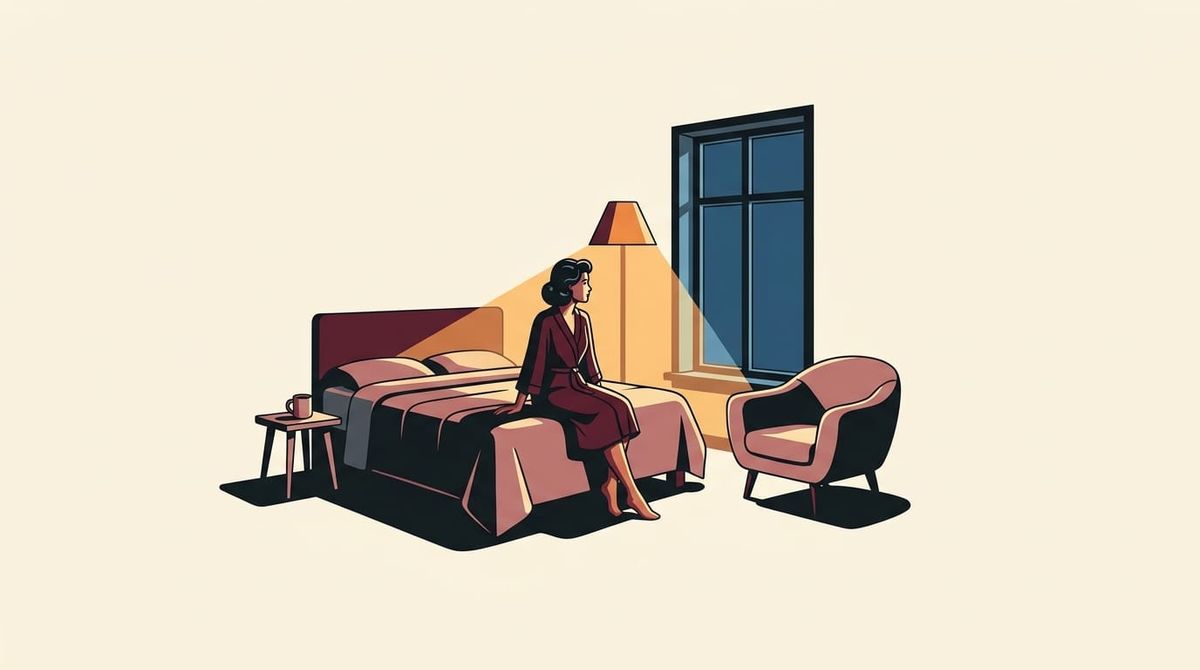
For millions of Australian women, the sleepless nights, the brain fog, the sudden sweats, and the unexplained anxiety were just "getting older." No one had given it a name. No doctor had connected the dots. No government had said: this is real, and it matters.
That changes now. The Australian Government has launched its first-ever national awareness campaign specifically focused on perimenopause and menopause. For the first time, a government health body is directly addressing a life stage that affects every woman but rarely makes it into official public health conversations.
The campaign is called "Could This Be Perimenopause?" and its message is simple: if you are a woman in your mid-30s to mid-50s feeling off in ways you cannot explain, you are not alone, and there is support.
A Campaign Built Around the 3am Moment
Creative agency Ogilvy Australia developed the campaign for the Department of Health, Disability and Ageing. The brief was not to produce a clinical public service announcement. It was to meet women where they actually are.
The creative device at the center of the campaign is an inner voice. Not a doctor speaking to patients. Not a government spokesperson listing symptoms. Instead, the ads inhabit the internal experience of a woman wide awake at 3am, wondering whether something is wrong with her mind, her body, or both.
"Our goal wasn't simply to raise awareness, but to reframe the experience," said Fran Clayton, Chief Strategy Officer at Ogilvy. "This campaign finds women in that 3am moment, wide awake, wondering if they're losing their mind, and says: we see you, this is a thing. Not to wrap it in a bow. Just to say it has a name, and there's support if you know where to look."
The Cost of Silence
The insight driving Ogilvy's creative approach is not complicated. Decades of silence around perimenopause have had a measurable human cost.
"The silence around perimenopause and menopause has carried a real cost. We've had decades of confusion, misdiagnosis, and suffering that women simply didn't need to face alone," Clayton said.
The campaign targets women aged 35 to 55 as its primary audience. But it also aims to reach younger women who may be years away from perimenopause, health professionals who interact with women at this life stage, and the support networks around them. The goal is to normalize the conversation across the ecosystem, not just inform individuals.
Looking for World-Class PR & Comms in APAC?
Tailored service packages for select brands and agencies.
A Multi-Agency Model for Government Health Communications
The campaign's production footprint reflects the scale of its ambition. Ogilvy handled strategy, creative, and website design. WPP Production managed agency production. Direction went to Fiona McGee through production company Revolver. Post-production was handled by The Editors, with sound by WPP Production.
But the creative work sits inside a larger communications program developed by the Department of Health, Disability and Ageing with a full agency village: Fiftyfive5, Universal McCann, Fenton, Cultural Perspectives, Carbon, and Hall and Partners.
"The voice at the heart of this creative is something many women will recognize," Clayton said. "When 'I thought it was just me' becomes 'oh my goodness, it's all of us', that's when women start asking the right questions."
That shift from isolation to shared recognition is the campaign's core emotional mechanism.
Want to reach thousands of marketing and comms professionals across Asia?
Get your brand in front of industry decision-makers.
Partner with Mission Media →


