
Inside CHAGEE's $8,000-Store Empire Built on Community, Not Ads
CHAGEE built 8,000 stores without traditional ads by prioritizing community depth over media reach. CMOs are questioning if this scales.

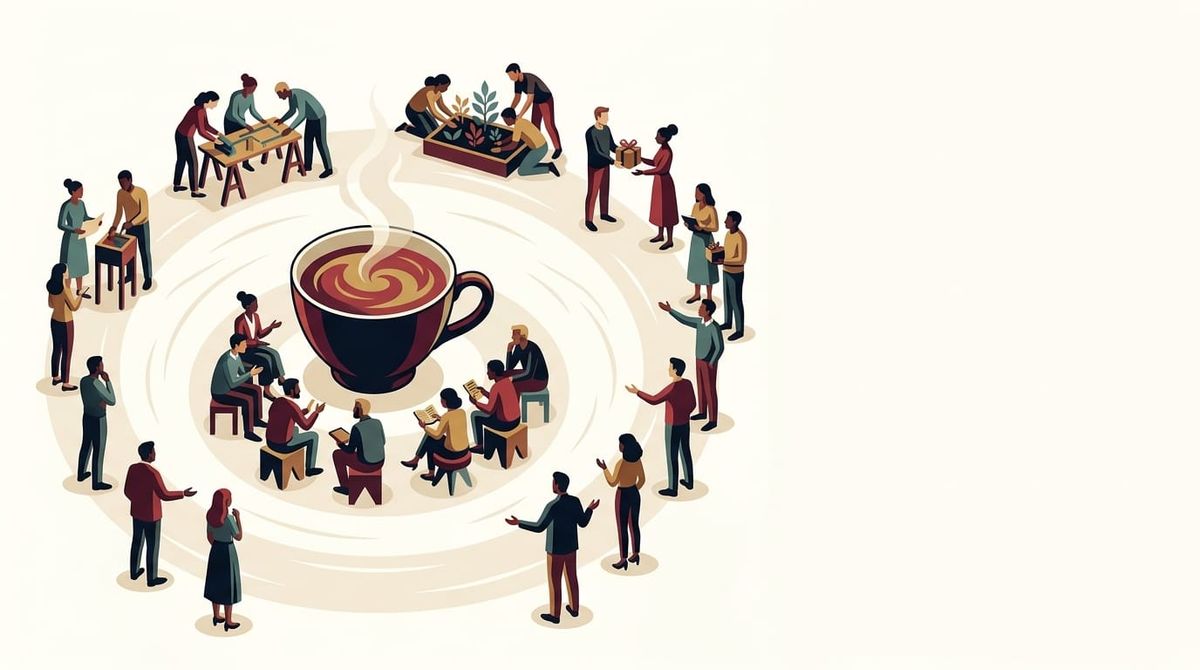
Here is what 8,000 stores and zero TV ads look like. CHAGEE, the premium tea brand founded in 2017, has built one of Asia's fastest-growing beverage empires without buying a single traditional ad placement.
At Content360 Singapore 2026, APAC CMO Eugene Lee made the case that community depth, not media reach, is the new engine of global brand-building. It is a compelling argument. It also raises harder questions than it answers.
Tea is Fighting the Wrong Competitor
CHAGEE's first strategic insight is deceptively simple: the brand is not competing against other tea companies. It is competing against coffee culture.
"Tea is the second most consumed beverage in the world after water," Lee told the Content360 audience. "But it hasn't seen the same lifestyle elevation that coffee has."
That gap, in CHAGEE's view, is a positioning problem, not a product problem. Coffee's dominance among younger consumers in Asia was built over decades through premium store experiences (think Starbucks), social rituals, and lifestyle branding. CHAGEE's bet is that tea can follow the same path, using community events, architectural retail, and cultural storytelling rather than traditional advertising.
The brand's stores are designed as what Lee calls "third spaces," somewhere between a destination and a daily habit, closer to lifestyle hospitality than a grab-and-go counter.
No TV, No YouTube, All Community
The headline claim from Lee's session is that CHAGEE runs entirely on social media and community events. No TV. No YouTube. For a CMO who spent more than 15 years at McDonald's, one of the world's biggest traditional media spenders, this is a significant break from convention.
"We are not trying to just do transactions," Lee said. "We want to go very deep with the communities that we're with."
In practice, this means CHAGEE hosts arts and crafts workshops, Pilates sessions, pet fashion shows, and other local events. Content is created as a byproduct of these real experiences, not produced top-down and distributed outward. The brand also tailors its social content by platform, running distinct formats for Instagram, TikTok, and Facebook rather than repurposing the same assets across all channels.
The strategic logic is clear: replace broad reach with concentrated loyalty. The gap in the public record is equally clear. There is no third-party data on whether this approach delivers comparable returns to traditional media spending. CHAGEE's rapid store growth signals consumer acceptance, but growth and media ROI are different metrics.
The 80/20 Localization Model and Its Limits
CHAGEE's expansion across Southeast Asia (Indonesia, Thailand, Vietnam, the Philippines) and now South Korea rests on what Lee describes as an 80/20 framework. 80% of the playbook is standardized. 20% is adapted to local market conditions.
"Localisation is not pop the copy into Google Translate," Lee said. "It's understanding the essence and going deep."
The examples are concrete. In Singapore, the brand's wellbeing pillar centers on physical fitness. In Malaysia, it focuses on healthier consumption choices. In South Korea, it tilts toward mental relaxation. Even product positioning varies: lemon tea is marketed as a mass, functional drink in Indonesia but as a premium, aspirational product in the Philippines, where the ingredient is less commoditized.
The model sounds replicable. But it carries a cost that rarely features in the narrative. In Singapore, CHAGEE exited and re-entered the market after its franchise-led approach failed to maintain the experience standards the brand requires. It shifted to owned operations, accepting slower scale in exchange for control. That detail matters. If community positioning cannot be reliably delegated to franchise operators, then "replicable" comes with a significant operational overhead attached.
Looking for World-Class PR & Comms in APAC?
Tailored service packages for select brands and agencies.
What This Model Actually Requires
CHAGEE's community-first strategy is genuinely different from most beverage brand playbooks. But the conditions that make it work deserve scrutiny.
The brand has scaled to 8,000 stores in nine years. That rate of growth requires significant capital. Community events, owned operations, and locally produced social content are not low-cost activities. Each market requires its own cultural interpretation across culture, wellbeing, and connection, which means the 20% localization layer multiplies in complexity as you add markets.
CHAGEE's December 2025 Sustainability Report embeds this community logic into operations, not just marketing. The brand runs "Silent Stores" staffed by hearing-impaired employees in Chinese markets, and a Night Clean Plan covering roughly 1,000 stores to support employee welfare. These are genuine operational commitments. They also cover about 12.5% of total store count, which raises honest questions about how the model scales proportionally across all 8,000 locations.
The harder question for marcomms leaders looking at this model is not whether CHAGEE's approach is admirable. It is whether the conditions that enabled it are transferable: a brand entering a category with room to define premium positioning, at a moment when social media communities were still forming around lifestyle beverages, with the capital to move across five markets in under 12 months.
CHAGEE's APAC CMO is right that community depth is becoming a genuine competitive differentiator. The question is not whether community matters. It is whether most brands have the patience, the capital, and the operational discipline to build it at the pace CHAGEE has.
"We want to be a trendy brand," Lee said, "but we don't want to be a trend that fades once its time passes."
That restraint is harder to copy than the strategy.
Want to reach thousands of marketing and comms professionals across Asia?
Get your brand in front of industry decision-makers.
Partner with Mission Media →


