
The Creative Economy's Blind Spot: FMCG Brands Win Big
P&G and Unilever collect more Cannes Lions than any other brands. Yet the advertising industry remains blind to the creative power of soap, detergent, and everyday products.

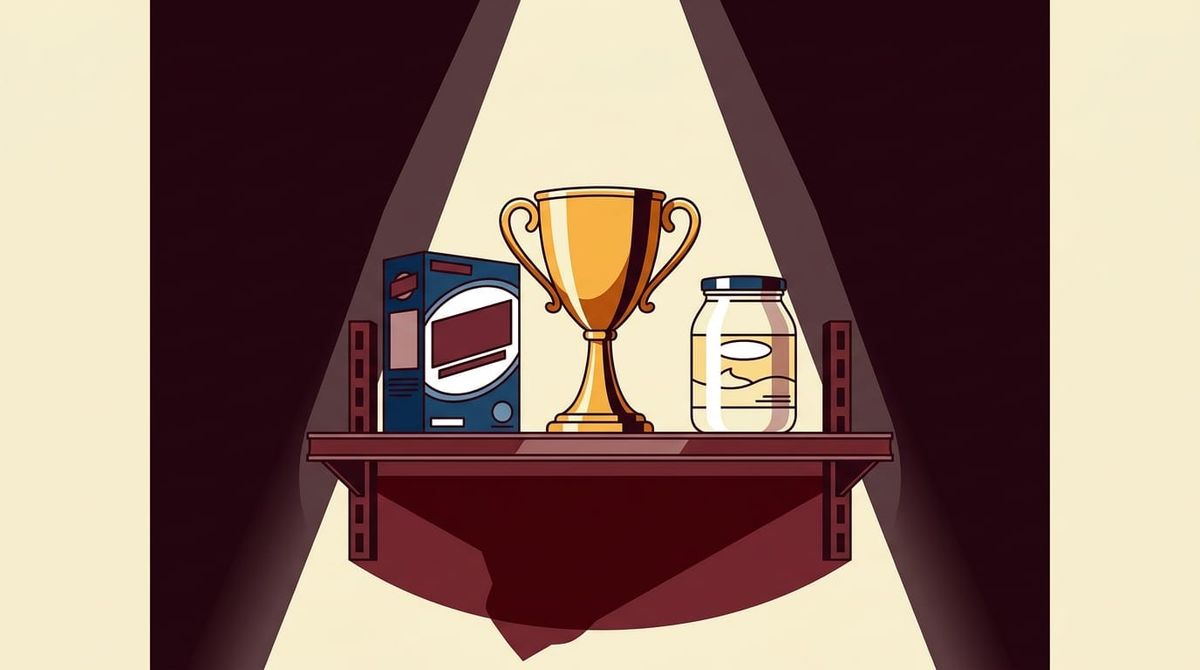
Ask someone to name the most creative ad they've ever seen. They'll say Apple. They'll say Nike. Maybe Spotify. Almost no one says Ariel.
And yet the judges who actually hand out the awards tell a very different story. For years, the brands selling soap, detergent, and mayonnaise have been quietly collecting more hardware at Cannes Lions than anyone else in the industry. The ad world just hasn't been paying attention.
The Numbers Don't Lie
Cannes Lions is the closest thing the advertising industry has to an agreed-on measure of creative excellence. And over the past 15 years, two companies have dominated it in ways that should be impossible to ignore.
Procter & Gamble was named Brand Marketer of the Decade at Cannes Lions in 2020. In the ten years from 2010 to 2020 alone, P&G collected 243 Lions, including seven Grands Prix, two Titanium Lions, and 49 Golds. It ranked in the top ten for Brand Marketer of the Year every single year of that decade. Not once. Every year.
Unilever was named Creative Marketer of the Year in 2024, having racked up over 230 Lions between 2010 and 2025. It had won the same award back in 2010. That is a company that sells laundry detergent and mayonnaise picking up the industry's highest creative honor twice in 15 years.
This is not a minor footnote. It is the most consistent creative track record in the history of the award. And the industry treats it like background noise.
Why Nobody Notices
Part of the reason is simple math. A tech company launches one product campaign a year. It becomes an event. It gets written about, dissected, turned into a case study. An FMCG brand runs dozens of campaigns at once, across multiple categories and markets, all year long. The volume makes the work invisible.
But there is also a bias that the industry rarely admits to. As Nabil Sleiman, Head of Marketing Communications at Almarai, put it: "I've seen good work get passed over not because it wasn't strong, but because the category it came from wasn't considered exciting enough. The idea gets judged before it even gets heard. That's not a creative standard. That's a bias."
The industry has been trained to associate creativity with products that feel new, exclusive, or culturally trendy by default. If a product has those qualities, the assumption is that the marketing around it must be good too. It is a comfortable assumption. And it is wrong.
The Hardest Brief in the Room
What gets missed is that FMCG briefs are genuinely hard. The product is cheap. The purchase is routine. The competition is sitting on the same shelf. There is no launch excitement, no cultural novelty to ride. You are not selling a one-of-a-kind product. You are selling milk. And you have to make someone care enough about your milk to reach past the one next to it.
That requires a different kind of creative thinking. Behavioral thinking. Cultural thinking. Always '#LikeAGirl' did not feel like a campaign. Dove's 'Real Beauty' did not feel like a campaign. They felt like conversations that were already happening in society. That is not a limitation of the category. That is the highest form of the craft, and we take it for granted precisely because it works so well.
Ariel's '#ShareTheLoad' did the same thing, connecting a laundry detergent to a global conversation about gender equality at home. That kind of thinking is harder to pitch, harder to sustain, and harder to turn into an award entry than a tech product launch. And yet it keeps winning.
Looking for World-Class PR & Comms in APAC?
Tailored service packages for select brands and agencies.
A Trend Heading in the Wrong Direction
Here is where it gets more complicated. P&G won 10 Lions in 2021, 10 in 2022, six in 2023, and four in 2024. That decline is not a sign that the creative capability disappeared. It is a sign of where the budget went instead.
As performance marketing and short-term sales targets consume more of the planning conversation, FMCG brands are redirecting money away from brand-building creative and toward trade promotions and price mechanics. The companies that understand long-term brand building better than almost anyone are being pushed to deprioritize it.
The Grands Prix today go to tech companies, automakers, luxury houses, and financial services firms such as Apple, Renault, LVMH, and AXA. Categories with new stories to tell every year and budgets built around brand investment. That is not a reflection of where the best thinking is. It is a reflection of where the industry's attention is pointing.
As Sleiman argues: "We've built a hierarchy in this industry that has more to do with how unique, sophisticated or trendy the product is than with how good the thinking is. And that hierarchy keeps us from seeing what's happening at the top of the creative rankings."
For marketing leaders across Asia-Pacific who manage FMCG clients or portfolios, this is worth sitting with. The creative hierarchy is not a meritocracy. The trophies didn't disappear. They moved. And the best ad in the room might be one nobody stopped to look at.
Want to reach thousands of marketing and comms professionals across Asia?
Get your brand in front of industry decision-makers.
Partner with Mission Media →


