
How Google's Shopping Moves Reshape Brand-Customer Relationships
Google's Universal Cart lets shoppers buy without leaving its platforms. As Amazon, TikTok, and Meta join the race for shopping dominance, brands face a critical new dependency on platform control.

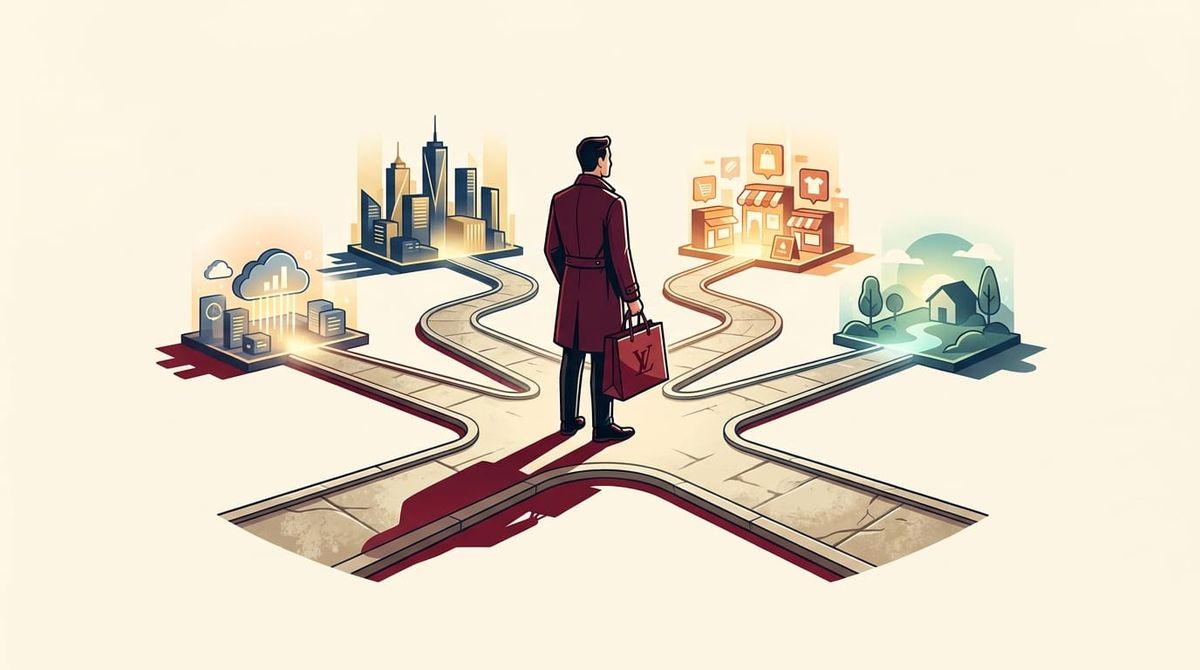
Google has made its biggest move yet to control how people shop online. Last week, the tech giant unveiled Universal Cart, an intelligent shopping tool that works across its most popular products. A shopper can now add items to a single cart via Google Search, Gemini, YouTube, or Gmail. When they're ready to buy, they check out through Google Pay.
This is not a small update. It's Google trying to own the entire shopper journey, from the first moment of curiosity to the final tap of purchase.
Universal Cart sits inside a larger framework Google calls the Universal Commerce Protocol (UCP), which launched in January. UCP is the technical foundation that makes this kind of cross-platform shopping possible. It also includes buy-now-pay-later options and loyalty pricing.
Google Isn't Becoming a Store. It's Becoming the Middleman.
Google's own executive was careful to draw a line. "We are not a retailer, we are not a marketplace, and that approach continues to guide us in this agentic era as well," said Ashish Gupta, VP and General Manager of Merchant Shopping at Google, speaking at a roundtable ahead of Google Marketing Live.
What Google wants to be is a matchmaker. It sits on an enormous amount of data about what people search for and what they intend to buy. Now it wants to connect that intent directly to a completed purchase, without the shopper ever leaving Google's surfaces.
For brands, especially smaller challenger brands, that creates a new dependency. As Alicia Gehring, VP of Media Strategy at WHITE64, put it, the key question is whether Google will continue to send interested shoppers their way at a price that actually makes business sense.
Molly Schonthal, Managing Director of Agentic Commerce at VML, sees this as part of a bigger shift. "The broader implication is that platforms increasingly want to become the 'digital steward' of consumer decision-making, not just the destination where transactions occur," she told Digiday.
The Race to Own the Shopping Moment
Google is not moving in isolation. Every major tech platform is scrambling to control the moment a consumer decides to buy something.
 Mission Media
Amazon replaced its AI shopping assistant Rufus with Alexa for Shopping earlier this month. The new tool integrates directly into Amazon's search bar and lets users ask questions, build personalized shopping guides, and automate deal hunting. OpenAI had its own answer: an Instant Checkout feature inside ChatGPT. That product has since been shut down.
TikTok Shop is also a pressure point. The platform drove US$4.9 billion in U.S. sales, according to data from e-commerce tracker Charm.io, as reported by The Wall Street Journal. Meta is reportedly testing a shopping research feature inside its AI chatbot as well.
"I think they're seeing the massive volume of transactions and shopping in commerce come out of TikTok Shop, and coming out of Meta, and they're saying, 'We want a piece of that,'" said Phil Case, President and Chief Client Officer at Max Connect Digital.
Looking for World-Class PR & Comms in APAC?
Tailored service packages for select brands and agencies.
The Biggest Obstacle Is Trust
All of these platforms face the same wall: consumers don't fully trust AI with their purchasing decisions yet.
Research from Bain & Company found that 54% of Americans find the idea of AI accessing their shopping history unappealing. Another 73% say they feel uneasy about how AI might use their personal shopping data. Yet 70% are at least somewhat comfortable with AI agents making purchases on their behalf.
Elizabeth Marsten, VP of Commerce Media at Tinuiti, offers a useful frame for what Google is actually trying to do with all of this. "What I saw more than anything else was [Google] getting us comfortable with the conversation with essentially a computer, to get to answers faster," she said.
That's the real game. Before consumers let AI buy things on their behalf, they have to get used to talking to it about what they want. Google's Universal Cart is as much about building that habit as it is about completing transactions.
For marketing and communications leaders, the implication is clear. The platforms your brand advertises on are no longer just places where consumers see your message. They're becoming the place where the sale happens too. That changes how you measure success, how you own the customer relationship, and how much you'll need to spend to stay visible.
Want to reach thousands of marketing and comms professionals across Asia?
Get your brand in front of industry decision-makers.
Partner with Mission Media →


