
APAC Industrial Companies Face Data Centralization Pressure as B2B Ecommerce Grows
Asian industrial suppliers face mounting pressure to centralize product data as B2B ecommerce reshapes buyer expectations. The Hydroscand case shows why digital transformation is now table stakes.

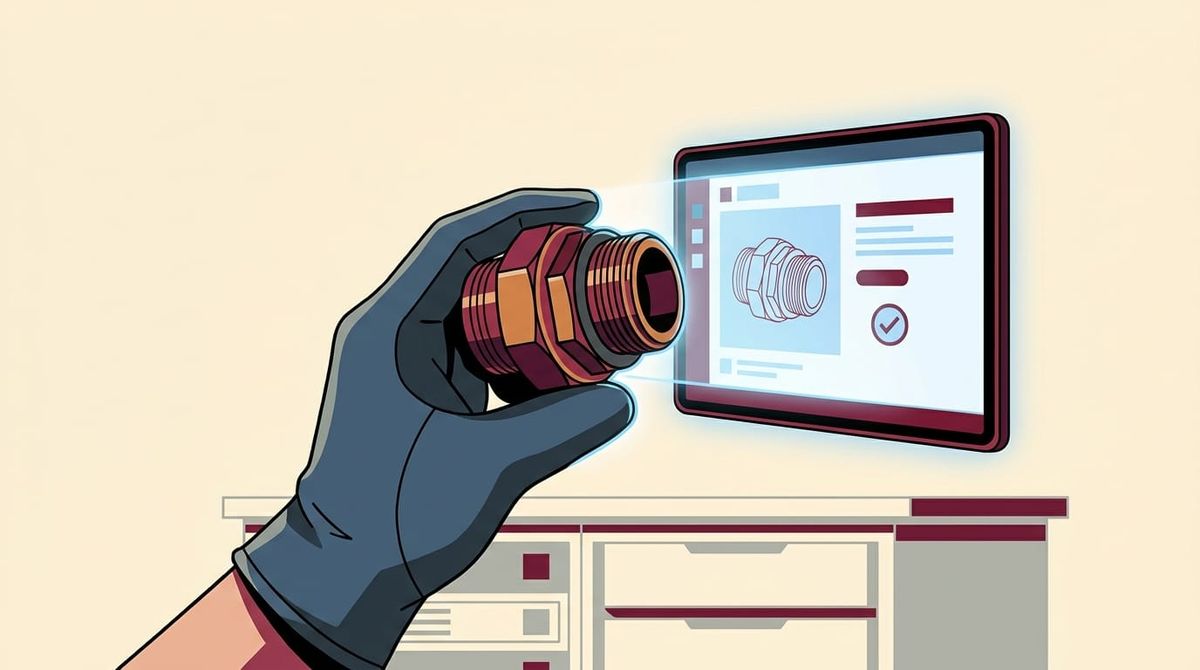
A field technician on a job site reaches for a hose fitting. The part number in his printed catalogue matches. He installs it. Later, the equipment fails. The printed catalogue was six months out of date.
This is not a hypothetical. It is the kind of operational risk that Hydroscand, a Swedish industrial hose and fittings supplier operating in more than 20 countries, was systematically exposed to before it overhauled how its teams access product information.
The company has now implemented Akeneo's Digital Showroom to centralize more than 30,000 product SKUs in a single, continuously updated platform. Its printed catalogue program is being phased out entirely.
The Problem with Print
Hydroscand's old system spread product data across multiple formats. Catalogues, PDFs, and ecommerce listings often told different stories. Field technicians relied on printed references that were not kept in sync with live specifications.

In an industrial environment, that gap has real consequences. A wrong specification means delays, extra service calls, and equipment that stays offline longer. For a company whose value depends on fast, accurate part identification, fragmented data is not a minor administrative nuisance. It is a business risk.
"Hydroscand's products are technically complex, which means precision is absolutely critical," said Linda Löfstedt Karlsson, Head of Product Information and System Owner for Akeneo at Hydroscand. "When a distributor, engineer or technician wants to find a product, they must be confident they have found exactly the right product."
One Source, Every Market
Under the new setup, product management, marketing, and sales teams all work from the same centralized dataset. Translations and updates push simultaneously to distributor portals, partner networks, and digital channels across all 20-plus markets.
This matters because 94% of B2B buyers now begin their purchasing process online, and 73% prefer to complete purchases digitally. Industrial suppliers still routing customers through printed references are asking professional buyers to work in a way that no longer matches how they actually operate.
Hydroscand shaped the Digital Showroom around its own field workflows rather than deploying an off-the-shelf solution. "Our collaboration with Akeneo has been a perfect journey," Karlsson said. "That co-creation process meant we were able to build exactly what we needed rather than trying to force our processes into a rigid system."
Next: The Field Technician's Phone
Hydroscand is now building a dedicated mobile app for technicians working at customer sites. The app will give field staff access to the same centralized product data without needing to return to a branch or desk to check a specification.
The company also expects AI to play a growing role in helping users navigate its technically dense product range. Karlsson described the goal as making product search feel less like a database query and more like consulting a knowledgeable colleague.
Akeneo CEO Romain Fouache framed the Hydroscand case as a signal of what industrial suppliers must now deliver. "Industrial companies are under growing pressure to provide the same level of product discovery and accuracy that customers expect in consumer ecommerce," he said.
Looking for World-Class PR & Comms in APAC?
Tailored service packages for select brands and agencies.
Why This Goes Beyond Hoses and Fittings
Hydroscand's move reflects a structural challenge for any business managing large, technically complex product ranges across multiple markets. The Asia-Pacific B2B ecommerce market holds roughly 80% of global B2B ecommerce share and is growing above 15% annually. Industrial suppliers in the region face the same pressure to digitize product data or risk falling behind competitors who already have.
The case is no longer theoretical. For Hydroscand, the cost of a wrong specification was visible in every service call that could have been avoided. Centralizing product data did not just reduce errors. It changed what accurate service delivery looks like.
Want to reach thousands of marketing and comms professionals across Asia?
Get your brand in front of industry decision-makers.
Partner with Mission Media →


