
A Foreign-Owned Platform Holds the Keys. Indonesian Creators Get Exposure.
Indonesian creators gain esports exposure through the MOONTON-Tale X partnership, but with a foreign-owned platform controlling distribution, IP rights and revenue sharing remain unclear.

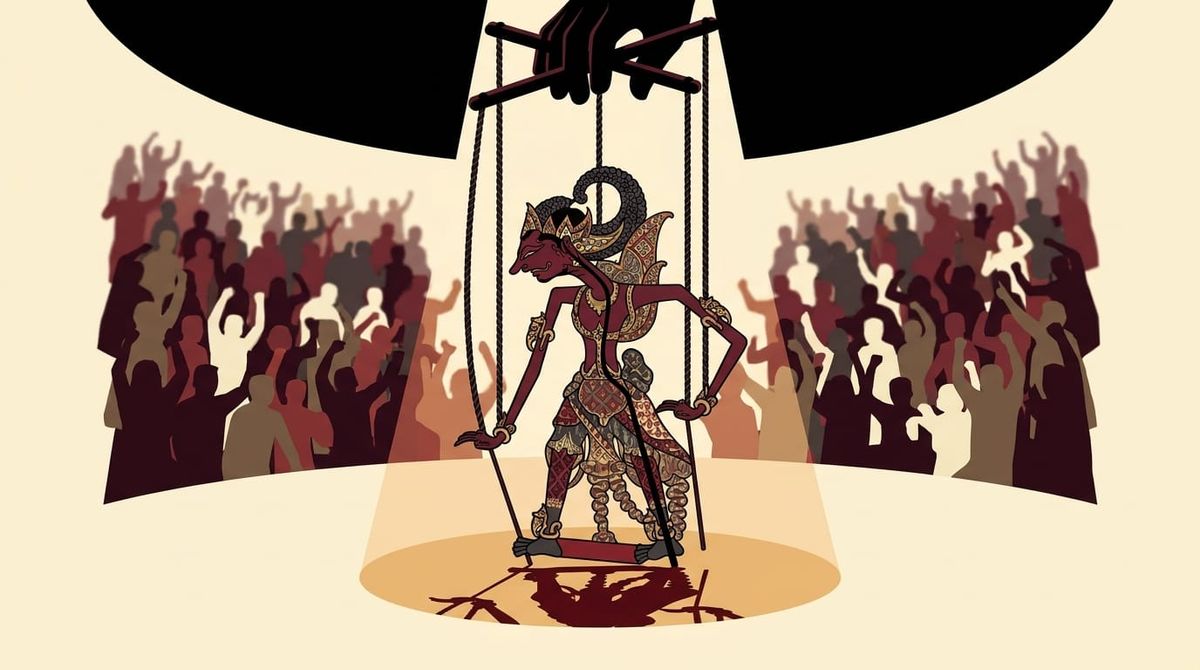
Indonesia has 150 million gamers. Its biggest esports league draws millions of viewers every weekend. And yet, local game developers capture less than 0.5% of the money that flows through the country's gaming industry.
That's the paradox sitting at the heart of a new partnership announced on April 24, 2026. MOONTON Games (the company behind Mobile Legends: Bang Bang) and IP entertainment firm Tale X have signed an agreement to bring six Indonesian-made characters and stories into the MPL Indonesia esports ecosystem. The government's creative economy ministry is backing it.
The deal sounds promising. But a closer look at the numbers raises a harder question: is this a genuine economic breakthrough for Indonesian creators, or another well-packaged promise that leaves the underlying problem untouched?
A Showcase, But Not Yet a Revenue Engine
The six local IPs entering the MPL Indonesia ecosystem include characters named Starla, Halomiyu, Beemala, Hai Dudu, Khuga, and Cerita Sole. They will appear in gameplay, broadcasts, and live events. MOONTON calls this the first structured framework to connect Indonesian creative production with large-scale esports distribution.
Joshua Budiman, Co-Founder and Director of Tale X, framed it boldly: "MPL Indonesia is not just a league. It is an ecosystem that connects gaming with our local creative economy. Through this collaboration, our local IPs are not only showcased but streamed to mass audiences across the world, creating real value across content, brands, and commercial partnerships."
The reach is real. MPL Indonesia Season 16 delivered a media value of US$6.6 million and reached 3.11 million peak viewers with over 100 million hours watched. Season 17's opening week saw a 61% jump in peak viewership, with English-language broadcasts growing 235.6% compared to the same period a season earlier. That's genuine international traction.
But media value measures advertising reach, not creator income. The deal does not publicly disclose licensing terms, revenue sharing, or any financial guarantees for the six IP holders. For now, "real value" largely means exposure.
The Platform Control Problem
There's a structural issue that the partnership announcement doesn't address: MOONTON is a foreign-owned company in the middle of an ownership change. TikTok parent ByteDance, which acquired the studio in 2021 for about $4 billion, agreed in March 2026 to sell MOONTON to Savvy Games Group, the gaming company owned by Saudi Arabia's Public Investment Fund, in a deal valued at more than US$6 billion.
That means Indonesian IPs are being distributed through a platform whose ultimate owner is changing hands just as the partnership launches. Who owns the commercial upside, what happens to IP rights as these characters grow in popularity, and whether a new owner will keep the same commitments to local creators are questions no public disclosure answers.
This matters because Indonesia's history with foreign gaming platforms follows a familiar script. The country is the world's third-largest market for game downloads, with 3.37 billion downloads in 2022. Yet foreign publishers collect 97.5% to 99.5% of gaming revenues generated inside Indonesia. Local developers have enormous audiences and almost no financial leverage.
Compare this to South Korea and China, where domestic developers built and kept control of the platforms that carry their games and characters. Indonesia's version relies on a foreign-owned platform to distribute local culture, and MOONTON's pending sale shows how quickly that ownership can shift, with local partners having no say. When the platform owner controls distribution, contracts, and the terms of monetization, the creator's upside has a ceiling.
What the Sponsorship Data Actually Shows
MPL Indonesia's commercial appeal to brands is growing, not shrinking. The M7 World Championship in Jakarta (January 2026) attracted Visa, Red Bull, Tokopedia, GoPay, and Gojek. Visa's involvement was particularly notable, signaling that global financial brands are starting to treat esports as a serious channel, not just an experimental one.
Season 17's current sponsor roster includes Indomaret, GOPAY, Infinix, IndiHome, Garnier, Telkomsel GamesMAX, and others. These are solid domestic consumer brands. What's missing is the international brand pull that would validate MPL Indonesia as a global cultural export platform. Domestic brands reaching domestic audiences is valuable. It's not the same as Indonesian IP commanding premium licensing fees in Tokyo, Seoul, or São Paulo.
Martinus H. Manurung, Head of eSports Business Development at MOONTON Indonesia, acknowledged the goal openly: "Our role now is to ensure that this scale creates real impact, by supporting local creators, strengthening our national teams, and working with partners to position Indonesia as a leader in global eSports."
The intent is clear. The execution timeline is not.
Looking for World-Class PR & Comms in APAC?
Tailored service packages for select brands and agencies.
Policy Promises and Structural Gaps
Indonesia's government has tried this before. Presidential Regulation No. 19/2024, signed in February 2024, introduced seven programs to accelerate the national game industry. One year after signing, independent analysts found execution had lagged significantly. Policy momentum tends to reset with every change in administration.
The creative economy sector employed 23.98 million Indonesians in 2022, up from 16.4 million in 2017. But those gains are in adjacent industries like fashion, crafts, and traditional media, not in game development, where skills shortages in programming and project management remain real barriers.
For APAC communications and marketing executives watching this space, the MOONTON-Tale X partnership represents a genuine signal, not just noise. MPL Indonesia is one of the only platforms in the region that can deliver millions of eyeballs to Indonesian cultural content. That distribution scale is rare and valuable.
But scale without economic terms is exposure, and exposure without revenue is a creative economy that still runs on foreign infrastructure. Whether the "creative playground" becomes a commercial engine depends on what the contracts actually say, whether IP rights remain with Indonesian creators, whether those terms survive MOONTON's change of ownership, and whether policy execution catches up to platform ambition.
Those answers aren't public yet. And until they are, Indonesia's esports bet looks more like a promising opening move than a solved equation.
Want to reach thousands of marketing and comms professionals across Asia?
Get your brand in front of industry decision-makers.
Partner with Mission Media →


