
How Community Marketing Outperforms Celebrity in India's D2C Space
Loopie chose community over celebrity. The baby gear brand's baby rave generated stronger ROI. A case study for D2C brands competing in India's market.

When most brands hit their one-year mark, they book a celebrity, run a discount, and call it an anniversary campaign. Loopie did none of that.
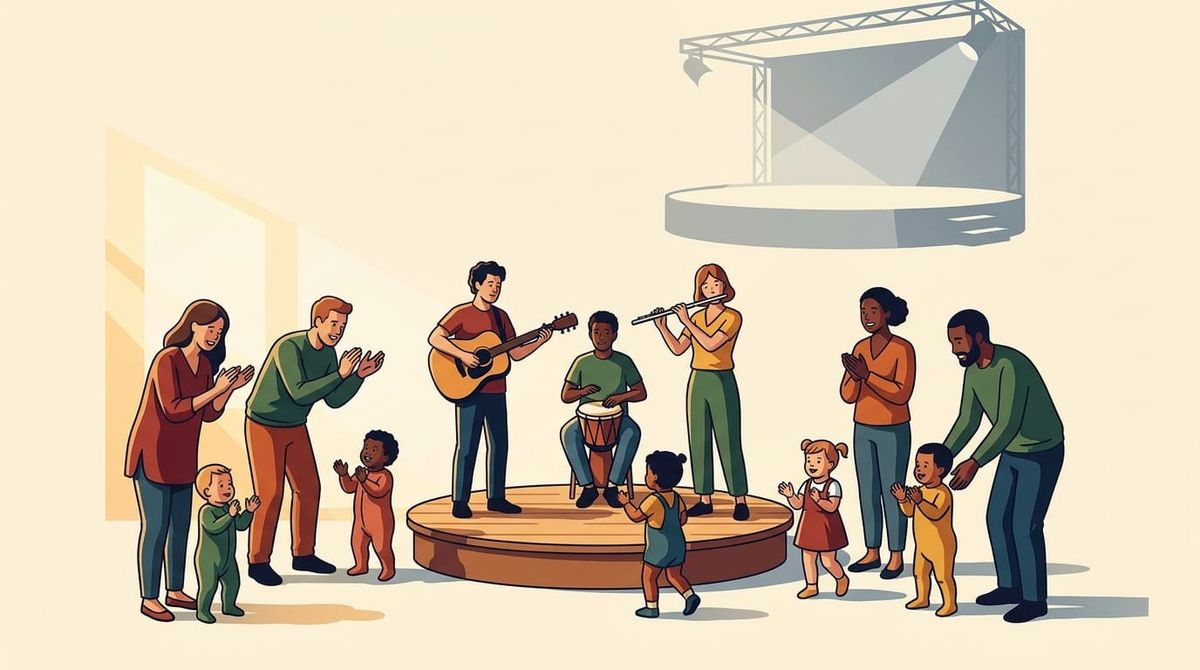
Instead, the premium baby gear brand threw a baby rave. Real parents, real toddlers, a live performance from Chickeen Masala (India's first baby rave band), and not a single Bollywood face in sight. The result was "Loopie Whoopie," the brand's first-ever campaign, and a case study in what happens when a direct-to-consumer brand bets on community over celebrity.
For marketing executives watching India's direct-to-consumer sector, this is worth paying close attention to. The playbook Loopie is running isn't just novel. It may be the smarter business move.
A Baby Rave Instead of a Launch Ad
The campaign kicked off with a store opening at Broadway in Pune, where Loopie hosted what it called a Baby Rave. Parents brought their children. The band played. People stayed, engaged, and shared. It was experiential marketing in its simplest form: give people something worth talking about.
What followed was equally deliberate. Loopie launched "Meet the Loopie Heads," a digital series featuring real parents who happen to also be recognizable names in India's startup world. Shashank Mehta of The Whole Truth Foods, and Disha Singh and Pradeep Krishnakumar of Zouk, appeared not as paid endorsers but as customers sharing their actual experiences. Founder peers speaking as parents, not as brand ambassadors.
This is the structural difference between celebrity marketing and community marketing. One rents attention. The other earns trust.
Why Celebrity Economics Don't Add Up for Direct-to-Consumer Brands
To understand why Loopie's approach matters, consider what the alternative costs. India's celebrity endorsement market runs on extraordinary fees: one day of Virat Kohli's time runs Rs5-6 crore (~US$60,000-72,000). Deepika Padukone commands Rs12-15 crore (~US$144,000-180,000) annually. For legacy FMCG companies with national distribution and fat margins, those numbers are defensible. For a bootstrap baby gear brand in its first year, they're simply not available as an option.
 Mission Media
But here's what's changing: the community-first alternative is no longer just cheaper. It's delivering better results on the metrics that matter. Celebrity ad volume in India dropped 12% in early 2025 versus 2023, per Campaign India reporting. Meanwhile, 78% of direct-to-consumer CMOs in India now report that influencer and community-led campaigns deliver stronger ROI than celebrity deals. And in the baby and parenting category specifically, the trust dynamic tips even further toward peer voices.
Parents researching products for their children are among the most thorough buyers in any market. They seek peer recommendations, read reviews, and look for social proof from people in the same situation they're in. A celebrity holding a baby carrier doesn't move the needle the same way a real parent founder talking honestly about their morning routine does.
Looking for World-Class PR & Comms in APAC?
Tailored service packages for select brands and agencies.
The Numbers Behind the Shift
The broader market context reinforces what Loopie is doing. Micro and nano-influencers in India achieve Instagram engagement rates of 1.73% versus 0.61% for mega-influencers and celebrities. That's nearly three times the engagement at a fraction of the cost. Smaller creators also convert at three to five times the rate of their mega-influencer counterparts.
A 2023 FICCI-KPMG report found that 68% of millennials in Delhi and Bengaluru prioritize authenticity over celebrity-backed products when making purchase decisions. That's the exact demographic Loopie is building for.
India's direct-to-consumer market has reached US$108.76 billion and is projected to hit US$300 billion by 2030. In that landscape, brands that build loyal communities are better positioned than brands that chase broad awareness. Repeat purchases, word-of-mouth referrals, and high lifetime value all compound more effectively when your customers feel like members of something, not just buyers of something.
What Akriti Gupta Is Actually Building
Loopie founder Akriti Gupta (an IIM Ahmedabad graduate who has spent nearly a decade in the children's products category) is explicit about the intention behind this approach.
Mission Media
"Introducing the world of Loopie to families across India has been a deeply intentional journey for us," she said. "We've always believed our role goes beyond creating products. It's about becoming a meaningful part of the parents' journey."
Her head of marketing, Rini Goel, frames the campaign philosophy the same way. "For us, everything begins with creating experiences that people can genuinely connect with. It's helped us build the brand more intentionally, where every touchpoint is designed to strengthen a real, lasting relationship with our community."
This is not campaign language. It's a distribution thesis: build a parent community that advocates for you, and you reduce the cost of acquiring every future customer.
Loopie, which appeared on Shark Tank India Season 5, is now scaling from its own site and major platforms like Amazon and FirstCry to a growing physical presence in major cities including Delhi, Mumbai, Pune, and Bengaluru. The community it's building is the foundation for that growth.
For APAC CMOs watching where India's direct-to-consumer market goes next, the Loopie Whoopie campaign is a clean example of what community-first brand-building looks like in practice: skip the celebrity, throw a baby rave, and let real parents do the talking.
Want to reach thousands of marketing and comms professionals across Asia?
Get your brand in front of industry decision-makers.
Partner with Mission Media →


