
Why Marketing Silos Are Costing Organizations 10-15% in Revenue
72% of companies fail to align marketing functions across departments, losing 10-15% of revenue. Mondelēz and Gartner research show how organizational structure, not technology, drives consumer relevance.

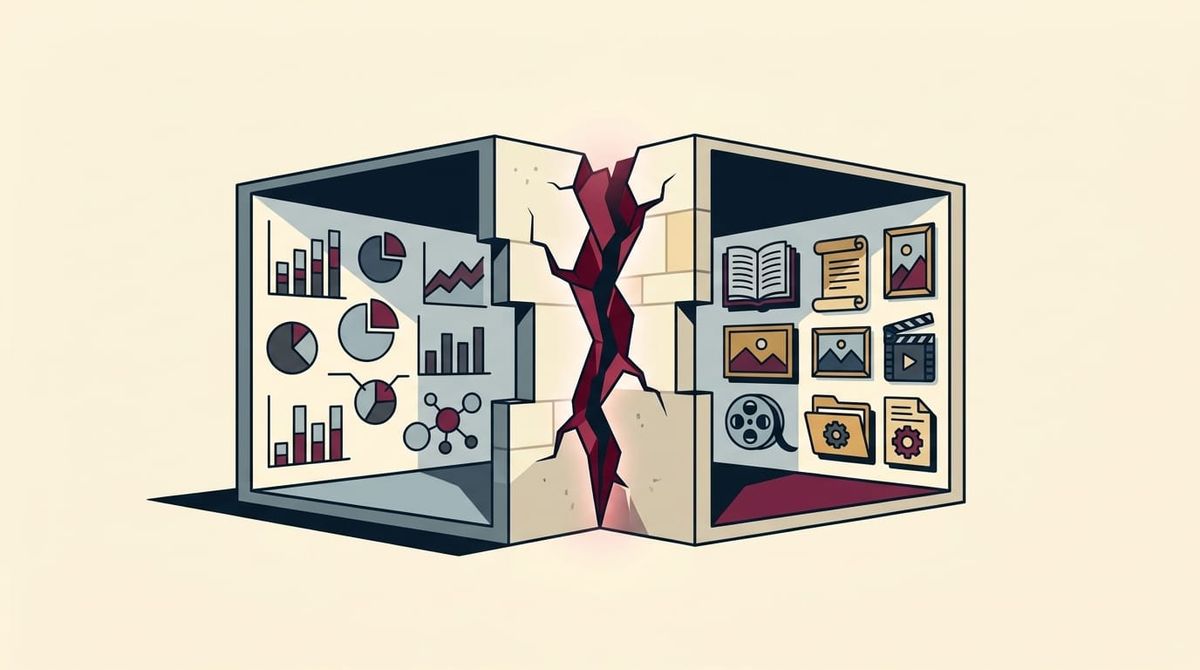
Most marketing teams are building campaigns for a world that no longer exists. The planning cycles are long. The functions are separate. The data sits in one place while the content lives somewhere else.
That's the diagnosis from Krinio Christaras, Head of Consumer Experience MENAP at Mondelēz International, writing in Campaign Middle East this week. Her argument is blunt: consumers have already changed how they live and buy. Most brands haven't caught up.
The gap isn't about creativity or media spend. It's about how marketing organizations are built.
The Structural Problem Behind Declining Relevance
Christaras is pointing at something that data has been confirming for years. Only 28% of organizations report that the full customer experience is actually owned and aligned across their departments. That means nearly three in four companies are trying to compete for consumer attention while their own teams are pulling in different directions.
40% of marketers say that invisible walls between teams are their single biggest obstacle. Another 62% of organizations report that their sales and marketing teams don't even agree on what a qualified customer looks like. When the left and right hand don't agree, the consumer pays the price in irrelevant messages.
The cost is measurable. Companies with misaligned teams lose 10-15% of potential revenue. Gartner puts the annual cost of bad data at US$12.9 million per organization. Marketing teams lose an average of 2.4 hours every day just navigating silo-related inefficiencies.
What Consumers Are Actually Experiencing
The consumer side of this equation is getting worse. In Australia, 58% of people say most brand emails they receive are irrelevant to them. Only 16% even read subject lines. Consumers aren't tuning out because they hate brands. They're tuning out because the messages don't match their lives.
This is what Christaras means by the campaign-experience divide. Brands are building campaigns based on planning calendars, not consumer behavior. The two things are increasingly out of sync.
For APAC marketing leaders, the challenge is compounded by regional complexity. ClickZ research identifies legacy systems, fragmented regional structures, and poor integration across departments as the defining obstacles for CMOs across Asia. Fewer than 20% of marketers have consumer journey maps that capture all online and offline touchpoints.
Looking for World-Class PR & Comms in APAC?
Tailored service packages for select brands and agencies.
Technology Won't Fix an Organizational Problem
Mondelēz has been investing in the solution. In September 2024, the company joined forces with Accenture and Publicis Groupe to build an AI-powered marketing platform, reducing content production costs by 30-50%. That's a meaningful efficiency gain. But Christaras' editorial makes clear that technology investments alone aren't enough.
IBM's 2025 CMO report found that 71% of chief marketing officers believe AI success depends more on people's willingness to adopt it than the technology itself. Only 21% say they have the talent needed to hit their goals. The limiting factor isn't the tool. It's the organization around it.
Harvard Business Review published a piece the same week as Christaras' column, calling for companies to redesign their marketing organizations entirely for what it termed "the agentic age." The timing is not coincidental. The structural reform conversation has gone mainstream.
Why This Matters Now
The APAC digital advertising market is projected to reach US$489.3 billion by 2029. As that market grows, the penalty for organizational lag grows with it. Brands that can't match their internal structure to how consumers actually behave will lose relevance, not because their campaigns are bad, but because the machine producing those campaigns is built for a different era.
 Mission Media
Christaras is right that the fundamentals of marketing still hold: understand people, create ideas that resonate, and show up at the right moment. The question is whether the organizations behind those fundamentals are built to do any of that in real time.
Most aren't. And consumers have noticed.
Want to reach thousands of marketing and comms professionals across Asia?
Get your brand in front of industry decision-makers.
Partner with Mission Media →


