
WPP: MENA Brands Should Skip LA, Focus on Home Markets
WPP's MENA leaders argue brands should skip competing in LA and activate local audiences watching from home. A dual-crew playbook for the 2026 World Cup.

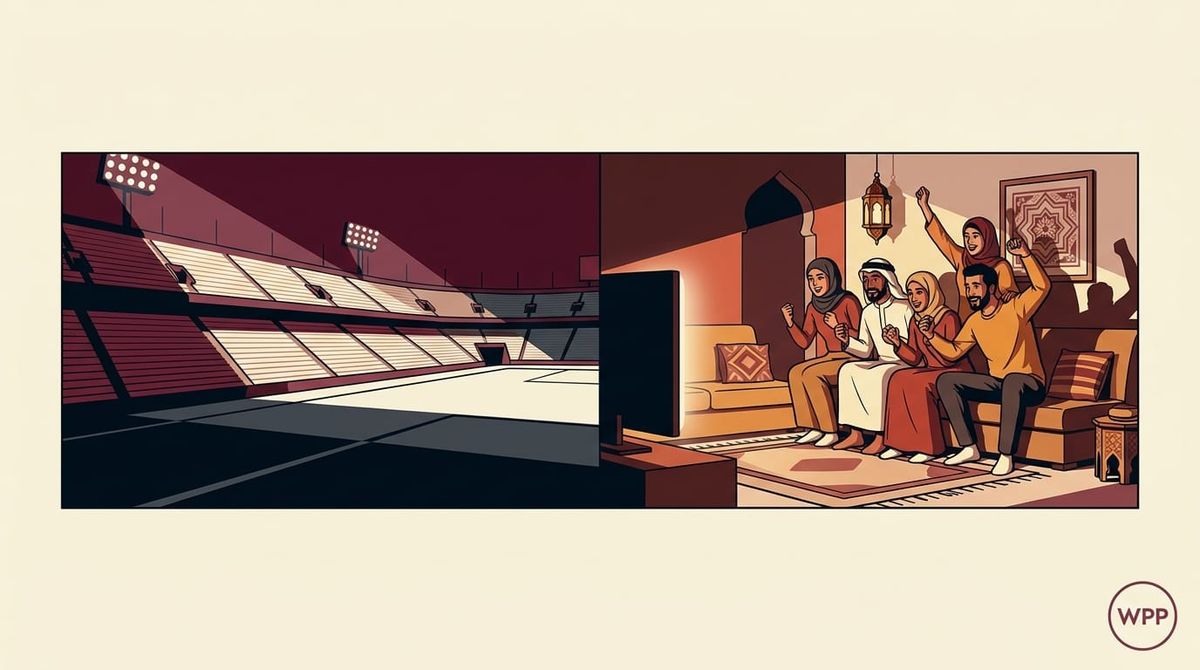
The 2026 FIFA World Cup kicks off in the USA, Canada, and Mexico this summer. For most brands in the Middle East, that's 7,000 miles of distance and a difficult question: how do you activate for a tournament your audience can't attend?
Mohieddine Mneimneh, WPP Media's head of content and influencer marketing for MENA, and Youssef Raad, the agency's gaming and sports lead, published their answer in Campaign Middle East this week. Stop trying to compete in Los Angeles. The real match is happening in Riyadh, Cairo, and Dubai.
The Audience Isn't in the Stadium
Mneimneh and Raad's argument starts with a simple observation. A brand's audience isn't watching from a stadium seat in Toronto. It's in a majlis in Riyadh, a cafe in Cairo, or a fan zone in Dubai. Global ads that speak to a generic worldwide audience miss this entirely.
"A generic global ad doesn't get this," they write. "It speaks a language of corporate unity that feels cold and foreign."
The numbers back up the opportunity. According to Digital Turbine, 49% of MENA fans plan to use their smartphones as their primary World Cup tool. And 80% to 91% of fans in UAE, Saudi Arabia, and Egypt will be on a second screen while watching on TV, checking stats or scrolling social media. In a US$20 billion regional ad market, that's a massive dual-screen audience with not enough locally relevant content to fill it.
Boots on Two Continents
The playbook Mneimneh and Raad propose involves deploying two types of crews simultaneously.
MENA crews would be agile creator teams spread across the region, from Cairo to Casablanca, Bahrain to Beirut, Doha to Dubai. Their job isn't to report on scores. It's to capture the real-time emotion of fans watching from home.
North America crews would embed with MENA diaspora communities in the host cities. This is a bigger audience than many brands realize. Expedia's Fan Travel Outlook shows a 235% surge in accommodation searches from the UAE and 180% from Saudi Arabia for World Cup dates. The crews at the stadiums become the bridge, sending stories of diaspora fans back to their families at home.
"The most impactful brands will be those who act as connectors," the authors write.
The 2 AM Window
There's a structural quirk most global campaign planners aren't built to handle. Around 50% to 60% of all matches fall in the 12 AM to 8 AM window for GCC time zones. Half the tournament plays out while the region is supposed to be sleeping.
Mneimneh and Raad see this as a new ritual brands can own. What does a fan need at 2 AM? Convenience apps, delivery platforms, and payment tools all have a shot at becoming part of the viewing ritual, not just background noise between broadcast ads.
Looking for World-Class PR & Comms in APAC?
Tailored service packages for select brands and agencies.
Sponsorship Scale vs. Local Activation
The WPP piece isn't arguing against big sponsorship spending. Aramco's Tier 1 FIFA partnership reflects the ambitions of the region's largest entities, and that's fine for them.
For everyone else, the argument is that local activation isn't the consolation prize. It's the smarter play. "When a brand shows up in this way," Raad writes, "it stops being seen as an advertiser and starts being seen as part of the team."
The fans in the majlis aren't looking for a global sponsor. They're looking for a brand that gets them.
Want to reach thousands of marketing and comms professionals across Asia?
Get your brand in front of industry decision-makers.
Partner with Mission Media →


