
Netflix and Spotify Team Up to Outbid YouTube for Premium Podcasts
Netflix and Spotify team up for exclusive Jay Shetty podcast rights, reshaping media distribution and brand access in Asia and beyond.

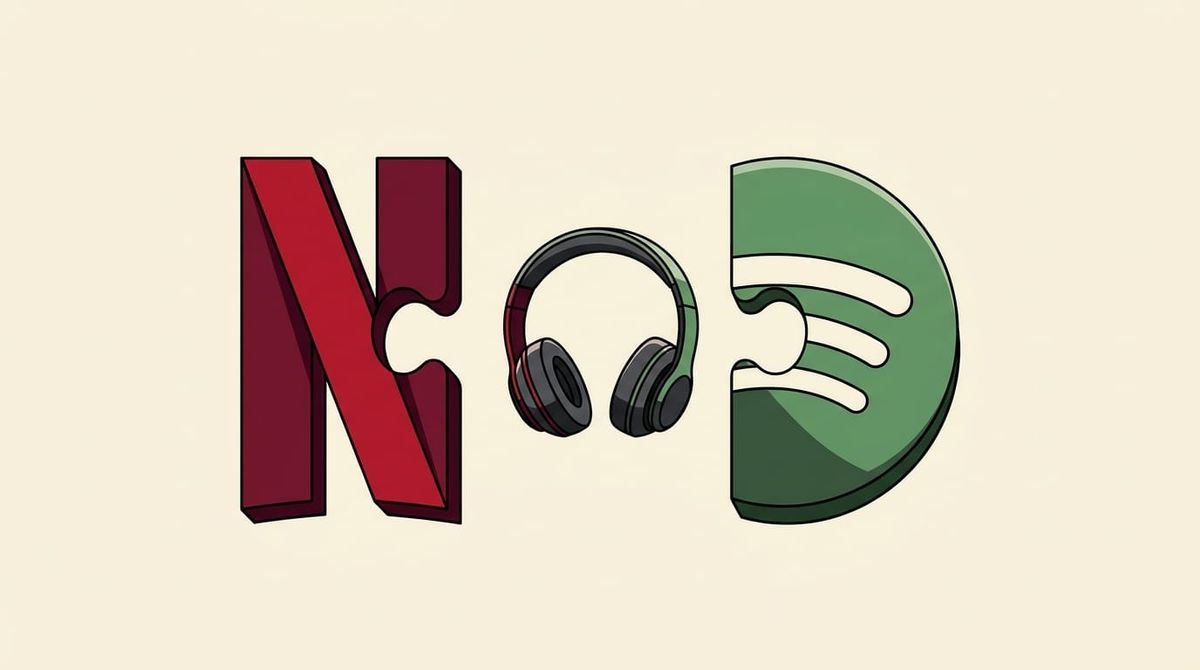
Two streaming giants just did something that has never happened before. Netflix and Spotify, who normally compete for attention, teamed up to pay up to US$100 million for the same podcast. The show is Jay Shetty's On Purpose, and starting July 13, 2026, it disappears from YouTube entirely.
This is not just a big check. It is a signal that the rules of content distribution have fundamentally changed.
The Deal That Rewrote the Playbook
Jay Shetty built On Purpose from scratch in 2019. Over 800 episodes later, the show has amassed 70 million listeners and over a billion total views across platforms. His YouTube channel alone pulls around 15 million views a month.
Three other companies reportedly bid nine figures to lock down the show. Netflix and Spotify won by joining forces instead of competing. Netflix gets the video rights. Spotify handles audio and global ad sales. YouTube gets nothing.
The previous deal was with iHeartMedia for three years. When renewal talks broke down, Shetty walked straight into a joint bid worth 10 times more.
Why Platforms Are Treating Podcasts Like Movies
Netflix did not stumble into podcasts. This is a calculated strategy to compete with YouTube for daily screen time.
 Mission Media
Netflix co-CEO Ted Sarandos has been unusually direct about it: "YouTube is a straightforward direct competitor for television. The connected television market is a zero-sum screen." Every minute spent watching Jay Shetty on Netflix is a minute YouTube does not get.
The economics back it up. Netflix launched 34 licensed and original podcast shows in January 2026 alone, partnering with iHeartMedia, Barstool Sports, and The Ringer. Most of those deals cost between US$5 million and US$10 million each. Podcasts are cheap compared to scripted TV, and 13% of US Netflix households already watched at least one Netflix podcast in the platform's first three months.
Spotify's Bill Simmons, who oversees talk content strategy after Spotify acquired his podcast network The Ringer, put it plainly: "YouTube has kind of this attitude, like, 'You're lucky to be on YouTube,' which congrats to them, but I'm not sure how long that's sustainable."
Looking for World-Class PR & Comms in APAC?
Tailored service packages for select brands and agencies.
What This Means for Brands and Marketers
When a show like On Purpose moves off YouTube and into walled platforms, the way brands reach that audience changes completely. Brands that previously bought ad spots through open programmatic markets now have to go through Spotify's ad-sales team directly. That means fewer options, more negotiation, and likely higher prices for premium inventory.
Spotify spent over US$800 million building out its podcast infrastructure between 2019 and 2022, then reversed course when exclusivity proved too costly for mid-tier shows. The Jay Shetty deal shows the reversal has limits. For mega-creators with global audiences, exclusivity still works. For everyone else, the economics have shifted toward open distribution and creator-to-fan subscriptions.
The consolidation is not just a Western story. Tencent Music's US$2.4 billion acquisition of Ximalaya puts China's dominant audio platform with 250 million monthly users under a single conglomerate roof. The pattern repeating across markets: large platforms consolidate premium content, independent creators get squeezed, and brands lose direct access to open markets.
Two Different Products, One Word
In 2026, "podcast" describes two completely different products. One is an open audio file anyone can access through an RSS feed. The other is a platform-native video show that lives inside a subscription app, competes with scripted TV, and commands film-level budgets.
Mission Media
Brands sponsoring podcasts now face a structural choice. Open distribution offers reach but less control. Platform-exclusive shows offer a premium audience but lock advertisers into a single platform's ad-buying system.
Jay Shetty's bet is that 70 million listeners will follow him behind a paywall. Netflix and Spotify are betting US$100 million that he is right. For brands, media buyers, and content strategists in Asia tracking where audiences are going, the days of one show, everywhere, for free are ending.
Want to reach thousands of marketing and comms professionals across Asia?
Get your brand in front of industry decision-makers.
Partner with Mission Media →


