
Why Pepsi Is Ditching Traditional Sports Sponsorship for Entertainment IP
Pepsi just launched Football Nation, a fictional country powered by football fandom. The shift signals a major change in sports marketing: brands are moving from paying for athlete endorsements to owning entertainment properties that shape culture.

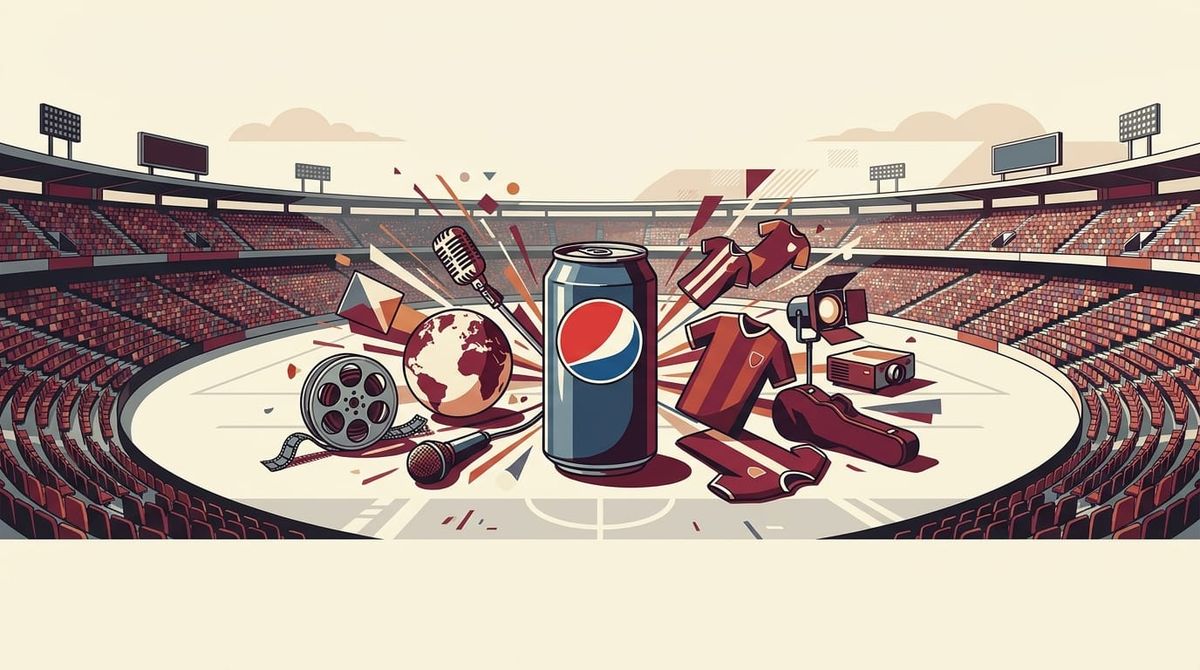
For decades, sports sponsorship meant one thing: pay a lot of money to put your logo on a jersey, a stadium, or a halftime show. Athletes were walking billboards. The arrangement was transactional. A check changed hands, a face appeared in an ad, and both sides moved on.
Pepsi just publicly walked away from that model.
On April 20, 2026, the brand launched Pepsi Football Nation, a fictional country powered entirely by football fandom. David Beckham, Mohamed Salah, Vinícius Júnior, Alexia Putellas, Lauren James, Florian Wirtz, and a surprise appearance from Gordon Ramsay star in a 3.5-minute cinematic film. It is one of Pepsi's most ambitious sports platforms to date. And it tells us something important about where brand marketing is heading.
From Endorsement to Entertainment Universe
The traditional athlete endorsement is simple: an athlete's image lends credibility to a product. A logo gets eyeballs. Someone buys a fizzy drink.
What Pepsi is doing is structurally different. Football Nation is not a campaign built around athletes. It is a fictional world that athletes inhabit. Beckham, Salah, and their co-stars are not endorsing Pepsi. They are characters in a Pepsi-owned entertainment property, a made-up nation where fans debate, banter, and collectively decide the rules of fandom.
The agency behind the work, BigTime Creative Shop, ranked highest among MENA agencies in the WARC Creative 100 2026 and fourth among independent agencies globally, described the ambition bluntly: to return Pepsi "to the days when the brand didn't just show up in culture, it shaped it."
That sentence is the entire strategic brief in one line.
Why Pepsi Can't Win the Rights Game
The competitive pressure behind this shift matters. Coca-Cola has FIFA locked up. Coke dominates global football rights deals in sheer volume. For Pepsi, outspending a rival that owns the official tournament partnership is not a viable strategy.
So Pepsi is not competing on rights. It is competing on culture.
Football Nation is a platform that Pepsi wholly owns. There is no rival who can outbid them for it because they built it from scratch. The fictional nation, its characters, its fan-debate activation on Reddit, its browser extension ("It's Football, Not Soccer") — none of that belongs to FIFA. It belongs to Pepsi.
This is the logic of a challenger brand applied to entertainment production. You do not need to own the tournament if you own the conversation around it.

The Roster Is a Market Map
Every athlete on the Football Nation roster is there for a reason, and geography is most of it.
Salah reaches the Middle East and Africa. Vinícius Júnior connects with Latin American audiences and Southeast Asian communities with strong Brazilian football loyalty. Putellas and Lauren James address the rapidly growing women's football audience in Europe. Florian Wirtz is the Gen Z entry point. And Beckham? Beckham is the global anchor, with particular weight in Asia.
A Beckham-led livestream masterclass run by EA Sports and Adidas in China drew five million viewers, making it the most-watched livestream involving a foreign celebrity in the country. Pepsi's casting of Beckham as the campaign's lead is not nostalgia. It is a deliberate bet on proven APAC market reach.
The campaign is rolling out across film, digital, social, and experiential. It is framed as a multi-year platform, not a seasonal activation. That framing signals something significant: Pepsi is building brand equity over time, not chasing a reach spike tied to a single tournament.

What This Signals for Sports Marketing in 2026
The global sports sponsorship market was worth US$106 billion in 2024 and is projected to reach US$195 billion by 2032. That growth is attracting more brands and pushing up the price of traditional rights deals. Unilever nearly doubled its U.S. sports marketing spend between 2024 and 2025. The entire CPG category is treating sport as core infrastructure, not seasonal decoration.
But spending more on the same model does not solve the underlying problem. Logo placements are passive. Fans scroll past them. Standard sports sponsorship benchmarks set the bar at a four-to-one ROI: US$4 in value for every US$1 spent. Compare that to entertainment IP crossovers, where partner brands on productions like F1: The Movie reported 13 to 16 times return from on-screen exposure.
The gap between those two numbers is the commercial case for what Pepsi is doing.
As SponsorUnited's 2026 sports sponsorship analysis put it, sports marketing is becoming "a connected system, rights as distribution, athletes as channels, streaming as infrastructure, and commerce/identity as the measurement engine." Rights are just one input. Culture is the output that actually matters.

Worth noting: Pepsi has not published conversion data or sales lift figures from Football Nation. The ROI comparisons drawn here (4:1 sponsorship benchmark vs. 13-16x entertainment IP) are industry-level metrics, not campaign-specific results. The proof of this model will come in year two and three of a platform Pepsi is billing as multi-year.
What Marketing Leaders Should Take From This
Football Nation is a useful case study for any brand executive thinking about celebrity partnerships and sports budgets, not because everyone should build a fictional country, but because it makes the underlying logic visible.
Athletes are not just faces anymore. They are audience networks, regional market levers, and cultural credibility signals. The brands winning this game are the ones treating celebrities as co-creators rather than rental inventory. BigTime Creative Shop's work for Pepsi earned the agency its standing as the highest-ranked MENA agency in the WARC Creative 100 2026 and fourth among independent agencies globally. The campaign is a reminder that creative ambition and strategic clarity are not in tension.
For APAC marketing and communications leaders specifically, the celebrity casting decisions in Football Nation deserve attention. The region's football fandom is enormous, digital, and underserved by campaigns that treat Asia as an afterthought. Pepsi is not doing that. It built the roster to reach Asia by design.
Want to reach thousands of marketing and comms professionals across Asia?
Get your brand in front of industry decision-makers.
Partner with Mission Media →


