
PR Industry Burnout Hits Critical Levels as Holding Giants Restructure
91% of PR professionals report poor mental health as major holding companies restructure. WPP and Edelman's moves reveal the true cost of legacy agency models.

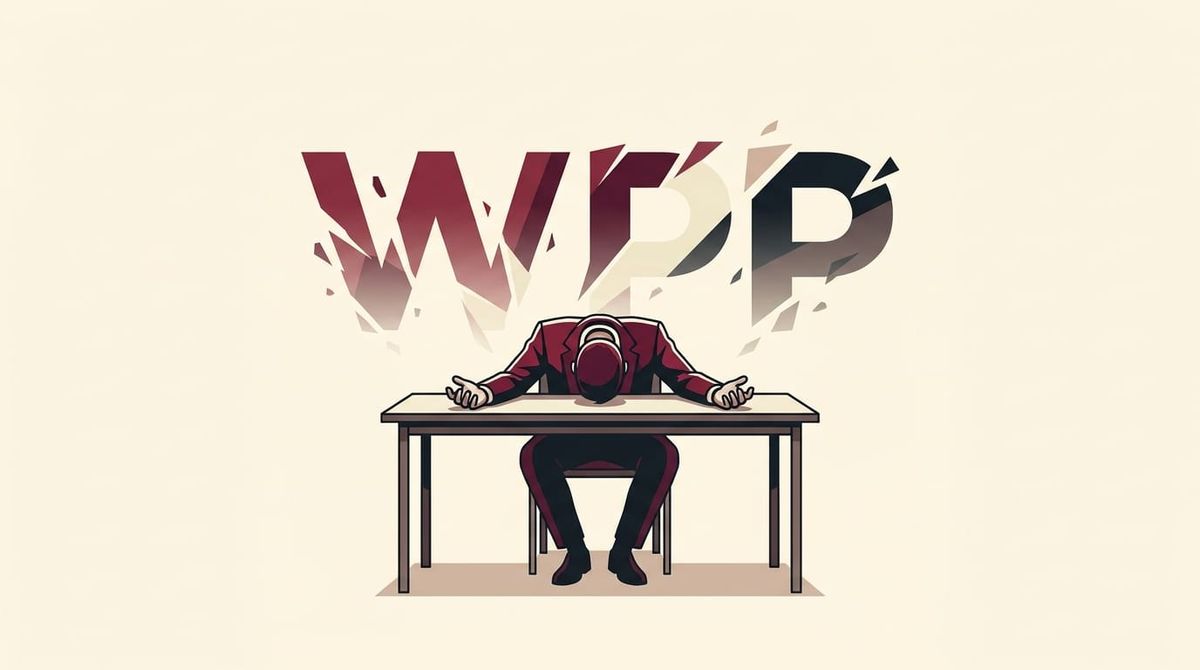
The PR industry has spent years calling stress a feature. Industry rankings listed it among the most stressful jobs in the world. Leaders wore exhaustion as a credential. Now the data has caught up with the culture, and the damage is hard to ignore.
The 2023/2024 PRCA/CIPR Mental Wellbeing Audit found that 91% of PR professionals reported poor mental health in the past 12 months. The share with a clinical diagnosis rose from 25% to 33%. PR professionals are now nearly 40% more likely to suffer poor mental health than the average UK worker. None of this is new. None of it has improved.
The Problem Is Structural, Not Personal
At the center of the crisis is a business model that was never designed to be sustainable. The classic agency structure rewards heroics. Retainers are priced on the assumption that teams will simply "make it work." Pitch processes burn staff for weeks without a guarantee of feedback or a win. Scope creep gets absorbed quietly, driven by fear of client disapproval rather than any genuine service logic.
 Mission Media
As Natasha Hatherall-Shawe, Founder and CEO of TishTash Group, writes: "Stress is not a badge of honour. What if the stress isn't a side effect of great work, but a symptom of a model that was never designed to sustain the humans inside it?"
The Institute for Public Relations found that 75% of agency staff rate their stress above the midpoint of a 10-point scale, compared to 67% at in-house brands. Only 35% say they're committed to staying at their current employer. 36% are actively job-hunting.
Looking for World-Class PR & Comms in APAC?
Tailored service packages for select brands and agencies.
APAC Is Where the Costs Are Most Visible
The talent math is worse in Asia. Agencies across the region are losing 20% to 30% of their staff annually. 41% of PR employees work between 49 and 79 hours per week, which works out to roughly 24 unpaid working days a year. Singapore leads the world in employee burnout rates, logging the longest average hours in APAC at 45 per week.
In Hong Kong, burnout rates more than doubled in a single year, from 22% in 2023 to 49% in 2024, according to research by AXA. By 2026, a new term has entered the workplace vocabulary: "resenteeism." It describes employees too financially trapped to leave despite severe burnout, producing corrosive cultures that damage performance from within.
The Holding Companies Are Acknowledging It With Their Wallets
The most telling signal is what the biggest firms are actually doing. WPP CEO Cindy Rose announced the Elevate28 restructuring in February 2026, consolidating Ogilvy, VML, AKQA, and Burson into a single unit called WPP Creative. Target: £500 million in annual savings by 2028. Her statement was blunt: "WPP is no longer a holding company."
Mission Media
Edelman cut more than 330 employees in 2025, over 5% of its global workforce, with CEO Richard Edelman framing it as simplification to meet modern client expectations. Both moves are implicit admissions that the legacy operating structure cannot compete.
Want to reach thousands of marketing and comms professionals across Asia?
Get your brand in front of industry decision-makers.
Partner with Mission Media →


